(Constantly updated. some sections not complete. last update: 7:26 PM 2/10/2026)

The Wheel Files - V.2 - 02/2026

(a.k.a. the Cyclekart wheel bible)
Kelly Wood (the Mad Kartist)


*** BE ADVISED *** ALL INPUT HERE REFLECTS THAT OF A PERSON WITH SOME EXPERIENCE THAT LIVES IN THE UNITED STATES AND DOES NOT TAKE INTO ACCOUNT THE POSSIBLE (AND EXTREMELY LIKELY) CHANCES OF DIFFERENCES IN WHEELS AND QUALITY OR PRODUCT AVAILABILITY BY COUNTRY. ITEMS MADE IN OTHER COUNTRIES, THAT HAVE AN IDENTICAL COUNTERPART IN OTHER COUNTRIES, (like the US) MAY NOT BE THE SAME PRODUCTS IN SOME CASES. JUST BECAUSE IT'S WRITTEN HERE, DOESN'T MAKE IT VALID IN ALL CASES.

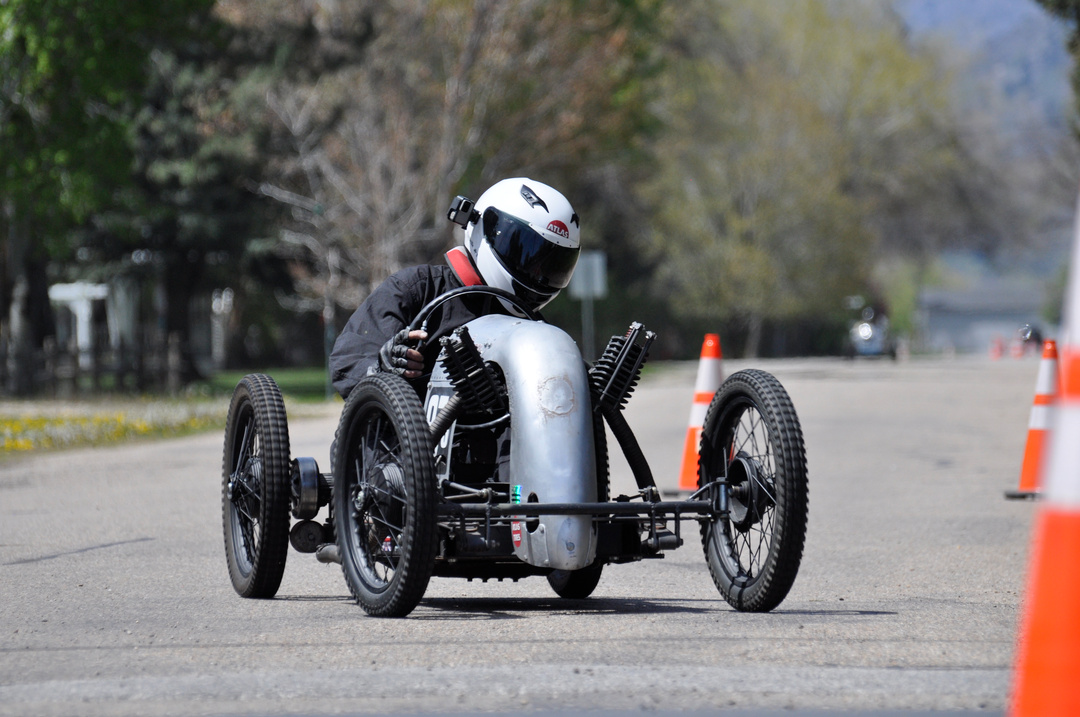
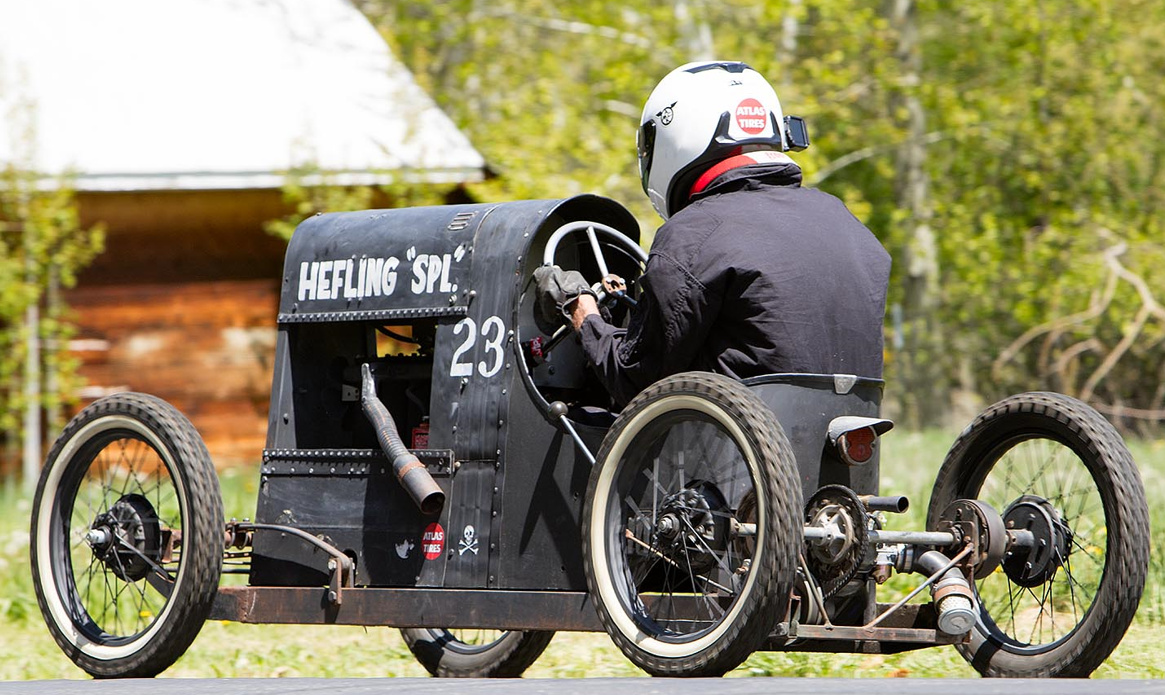
Also more noteworthy than anything: The Cyclekart started in North America and was created by Peter Stevenson in California. His son, Michael Stevenson still watches to this very day, the evolution this thing is taking. It's just grand.

None of this, would have happened without them. Thank you, both of ya.

Kelly.


Let's get on this barrage of information, shall we?

Jump to section >>>
Common Wheels
17" Tire Sizes
Tire Sizes other than 17's
Tires
Lacing CT90 Wheels
The Originals
Custom Wheels
Bike Cross Reference Table

This guide is about cyclekart wheels. The intent: To share every single thing possible about the wheels used on cyclekarts.

... but first.

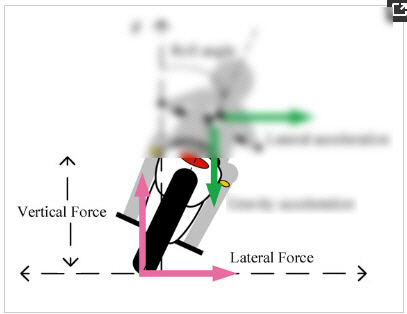
Caution: The common wheels suggested for cyclekarting are not designed for the side-load forces when used on a 4 wheeled vehicle. (e.g. The Cyclekart)

They are motorcycle wheels, not car wheels. They will flex, and break if you push them too hard. That's how you get hurt.

Remember this.

If you intend on pushing the commonly acquired cheap wheels to their limits, it may be a better idea to go a different route with wheels and than just getting what everyone else uses. This entire guide was written with the input and experiences of many seasoned individuals and 30 YEARS of experience doing this. We'd hate to see you hurt yourself in the persuit of fun.

If your intent is to race & thrash hard... hey, See Custom Wheels for ideas on stronger wheels.


To start: The wheels are usually the most expensive part of the journey. The base wheels will set you back around 500 dollars or so if bought new. This does not include the bearings, rear wheel adapters, tires or tubes. It could be more, or less depending on how your approach it.

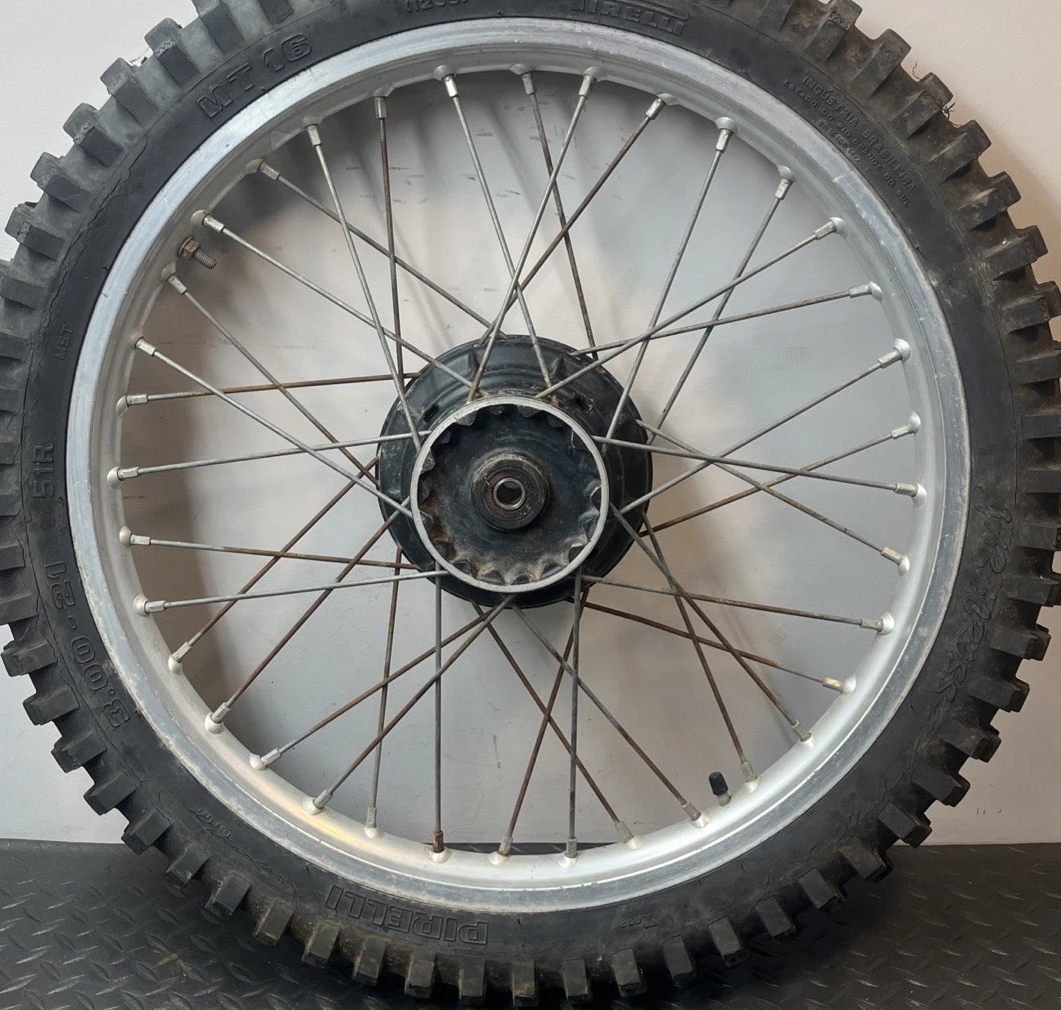
The Cyclekart Wheel size is a spoked 17 inch motorcycle wheel with a rim width of 1.40, or 1.60. They do not have to be CT90 wheels. (honda trail 90) Just because the original formula used them and a lot of people use them, doesn't mean you have to use CT90 wheels. Most use them because of the availability of the other hardware needed and support in the community for them.

... that, and a growing number of builders just want to buy it these days rather than figure it out on their own.

In reality, any 17 inch spoked wheel (other than the commonly known ones used) can work for your average cyclekart if you put your mind to it.

Cyclekart wheels are not car spare tire wheels, trailer wheels, or any of that. They are spoked motorcycle wheels which capture the spirit.

There are the usual wheels most people use, however the more creative ones might use something entirely different artistically to match up to their car to their chosen inspiration car in stellar fashion. Often, those creative options "can" cost less than just buying what everyone else uses if you're smart about it. (usually more though) More on custom wheels HERE

Before you decide to get wheels though, consider this:

Width of your car. How wide are you planning to make it? The cyclekart hovers around 42" wide maximum (commonly). That's EDGE OF WHEEL, to EDGE OF WHEEL. (or 39-40" if going from center tread.) Knowing this, will help you decide which way to go with wheels and your axles. (real helpful to know before you make it and find out stuff didn't work, yes?)

Read on.

Common Wheels Back to Top


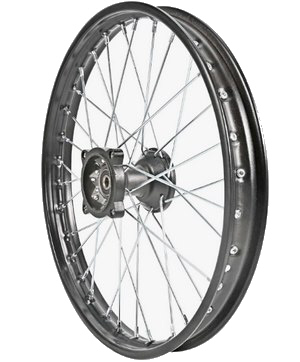
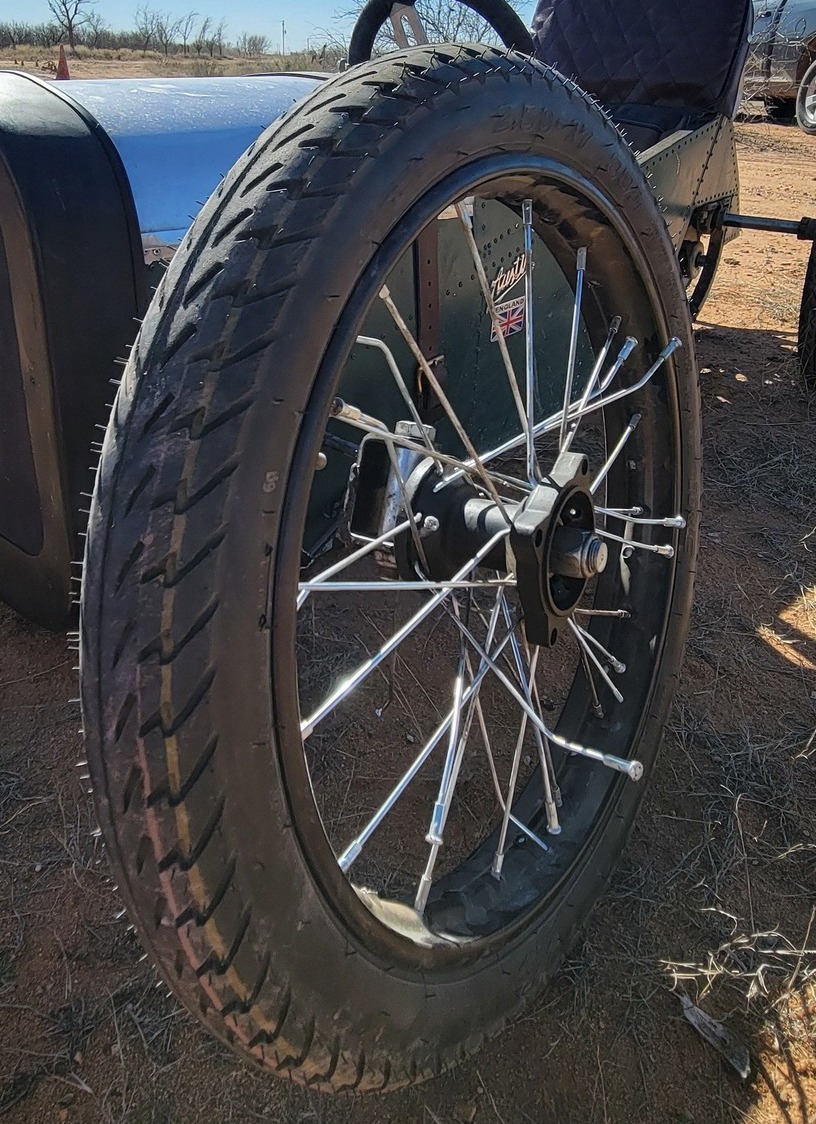
Currently, one popular AND GROWING option in wheels for the common cyclekart is the replacement front pit pike (or motocross) wheel.

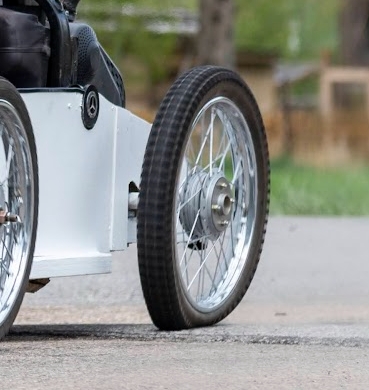
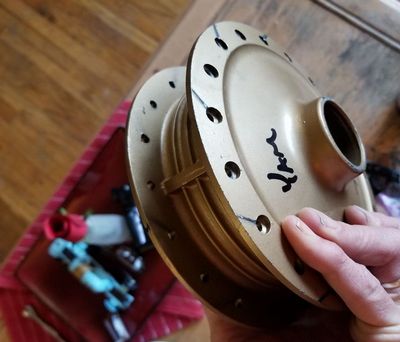
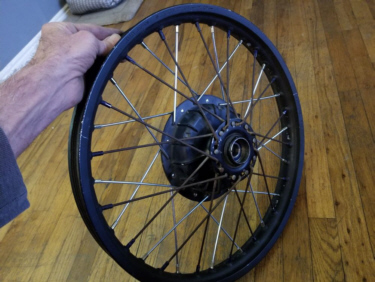
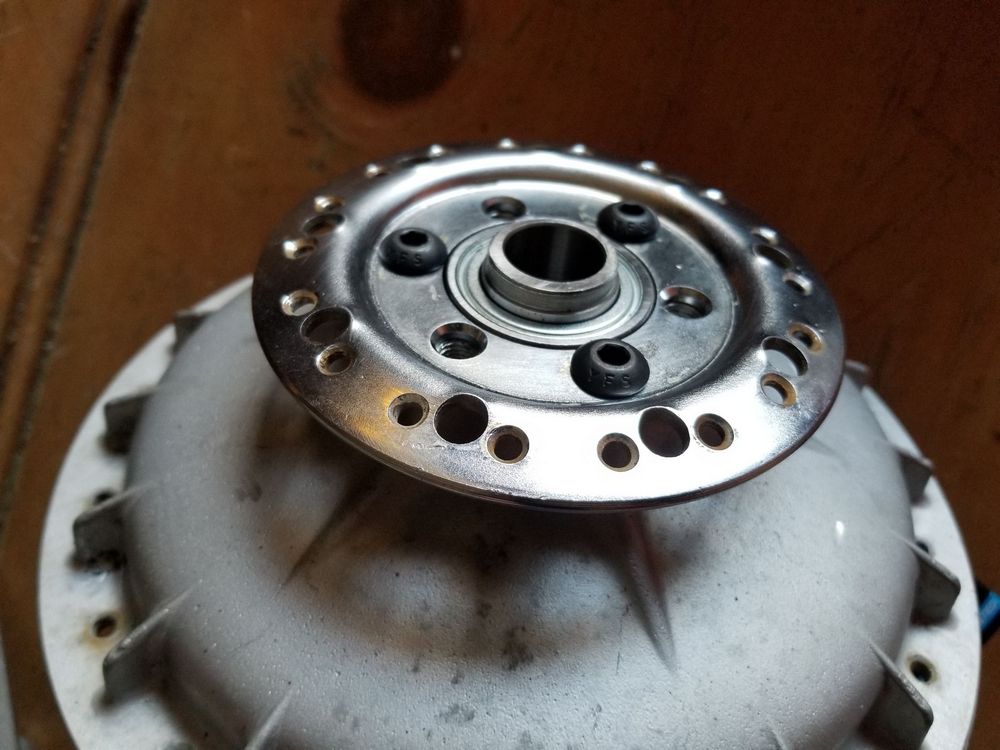
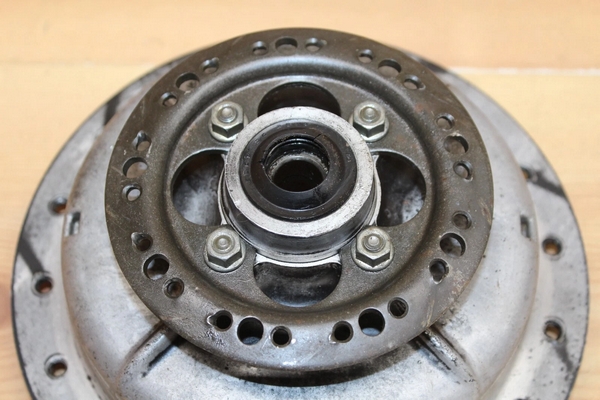
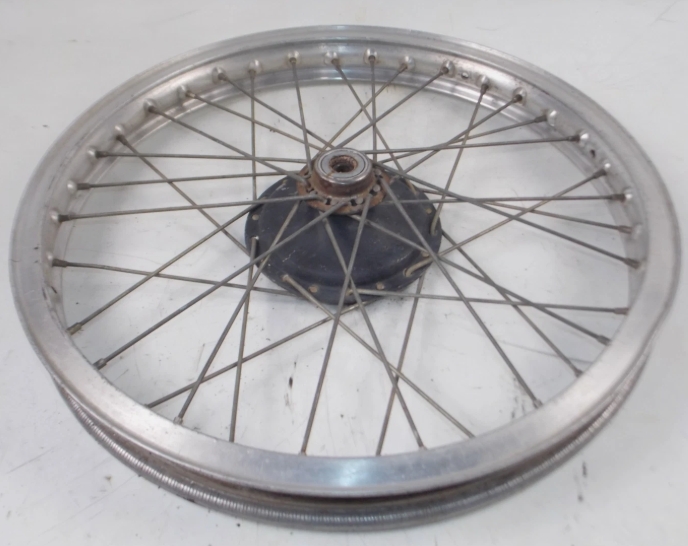
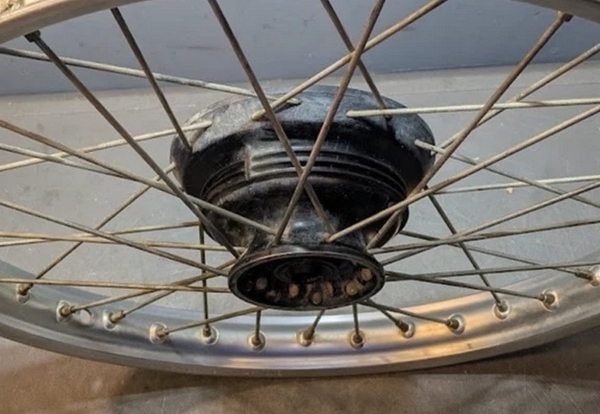
They look like this and are sold by many sellers. We'd give you a link, but so many places sell them and it changes, you get to find them yourself. At least you have the specs and picture...

What you're looking for is this: "Front Wheel Rim Hub for Motocross off Road Dirt Pit Bike (70/100-17 (15Mm Bearing))


They are 17 x 1.60. There are bearings readily available for them, they work, someone makes an adapter for them to put them on your car... and there's a blizzard of tires you can use. It'll run you anywhere from 50 to 100 bucks per wheel depending on the seller. They are cheap chinese wheels imported to the US.

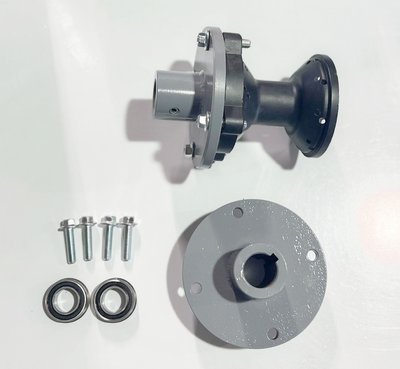
The adapter can be bought here and is 185.00 dollars as of this writing:

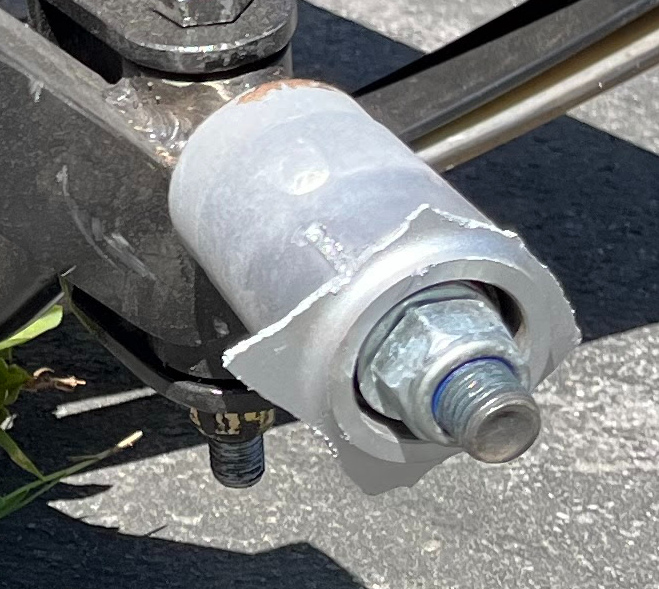
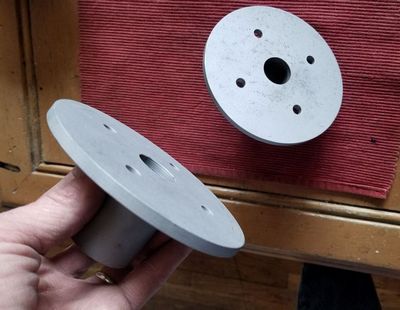
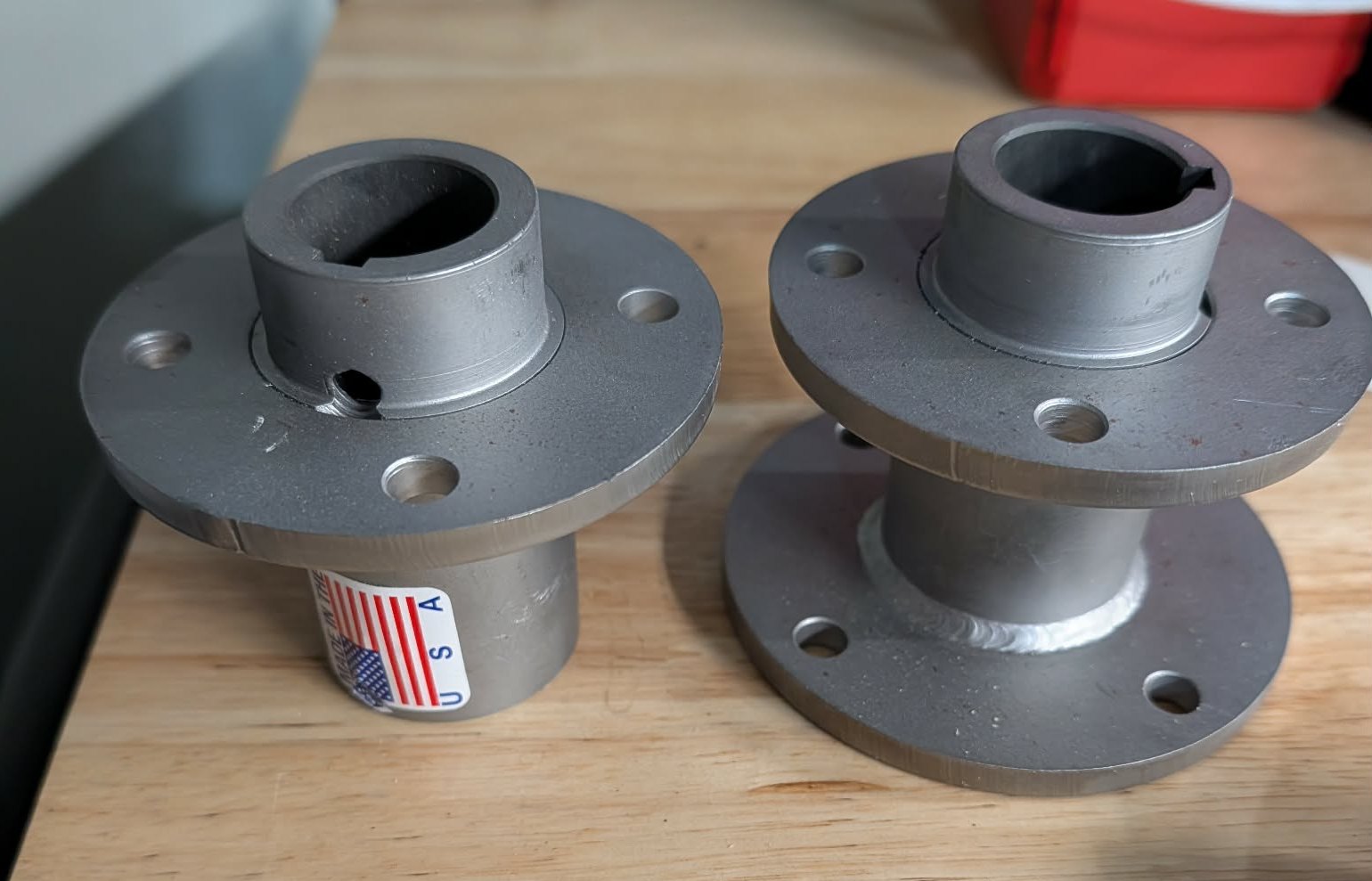
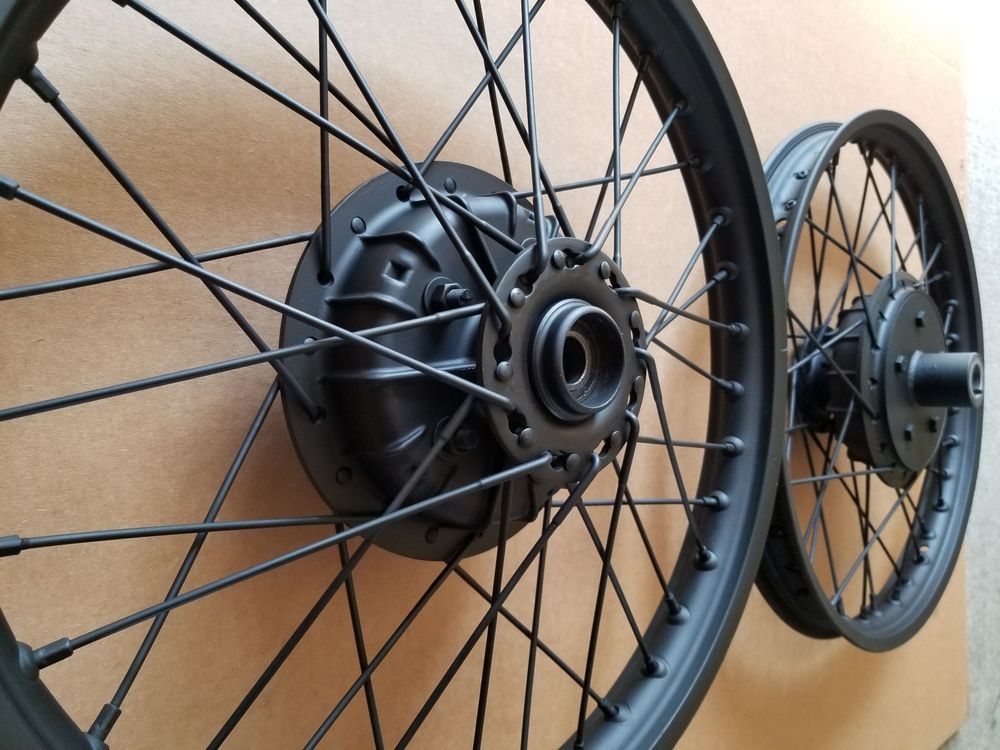
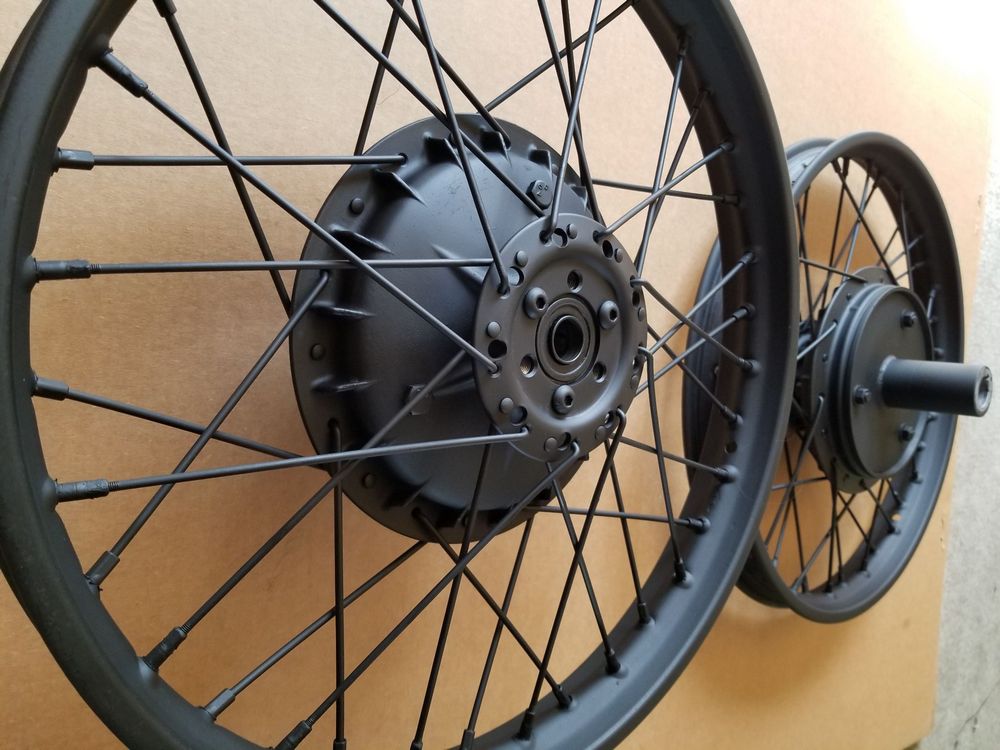
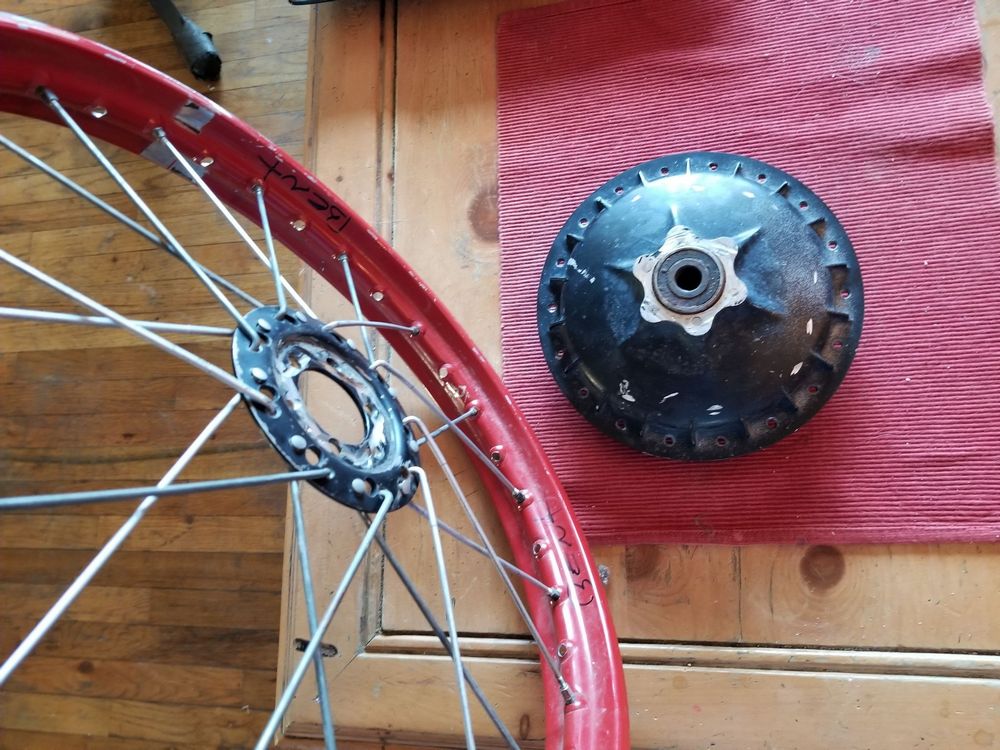
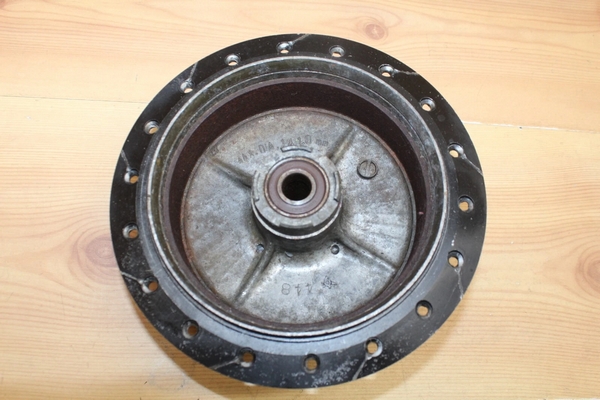
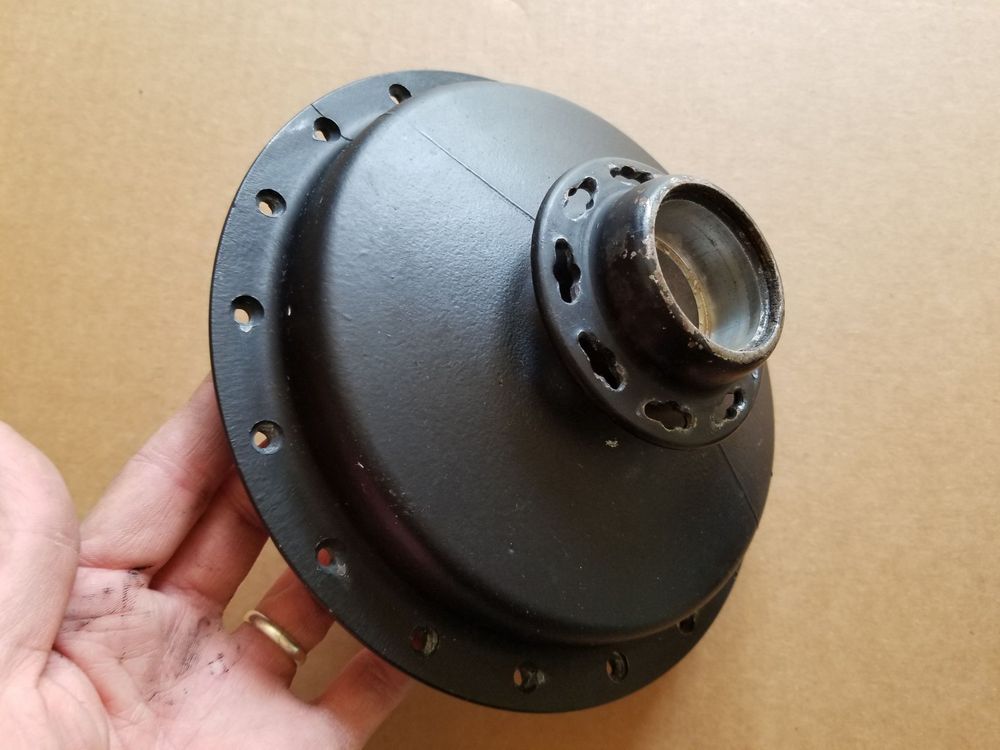
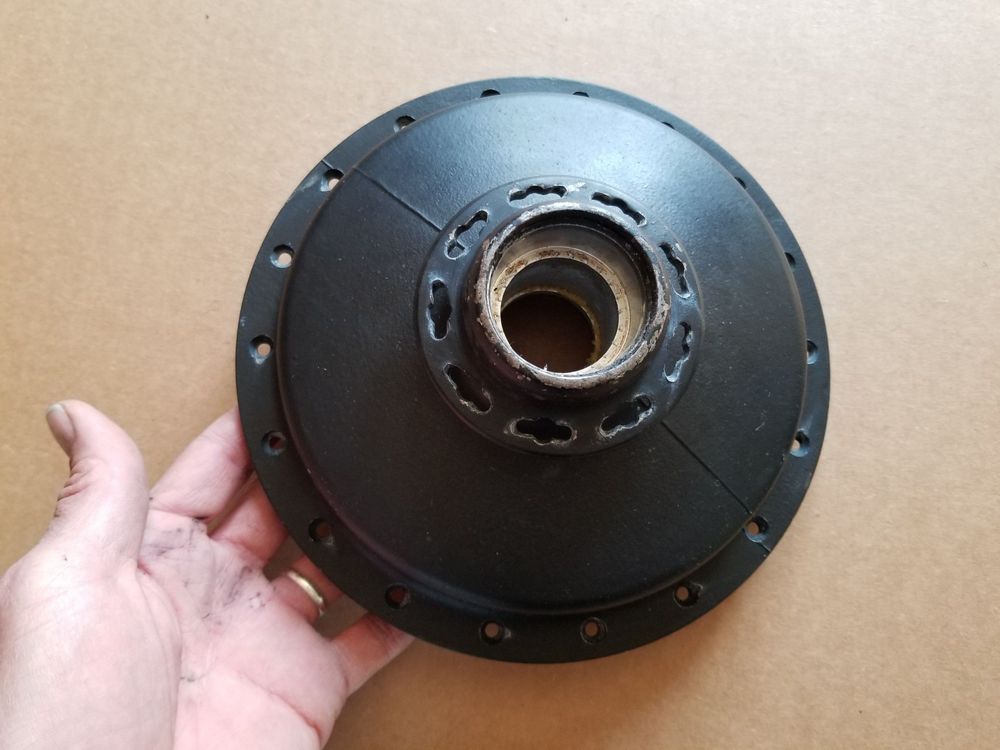
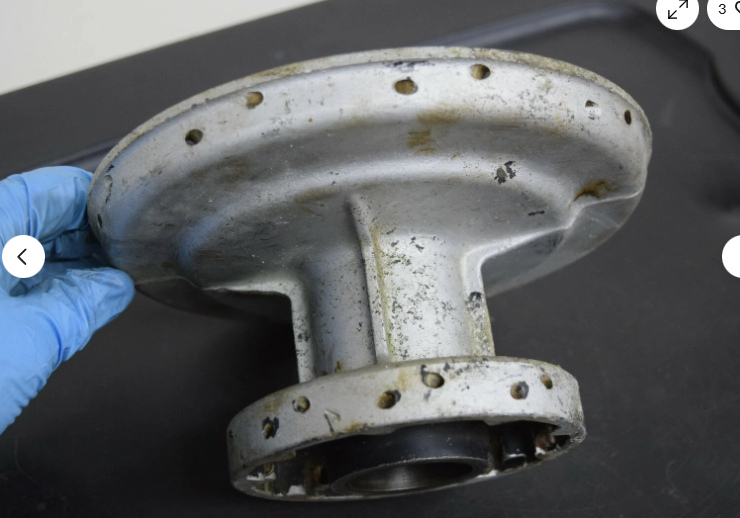
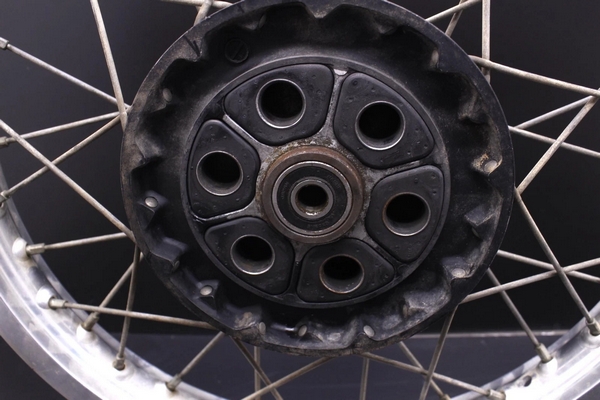
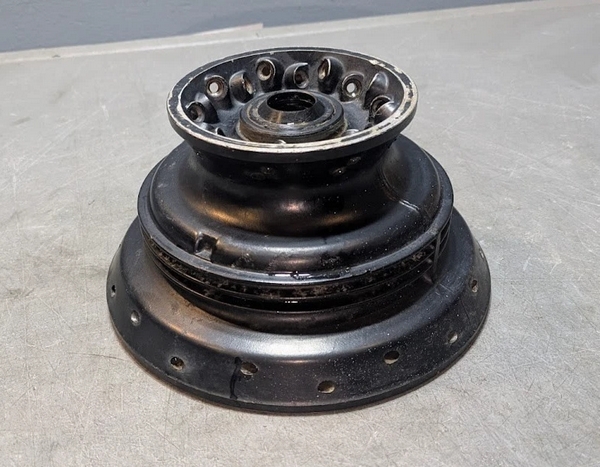
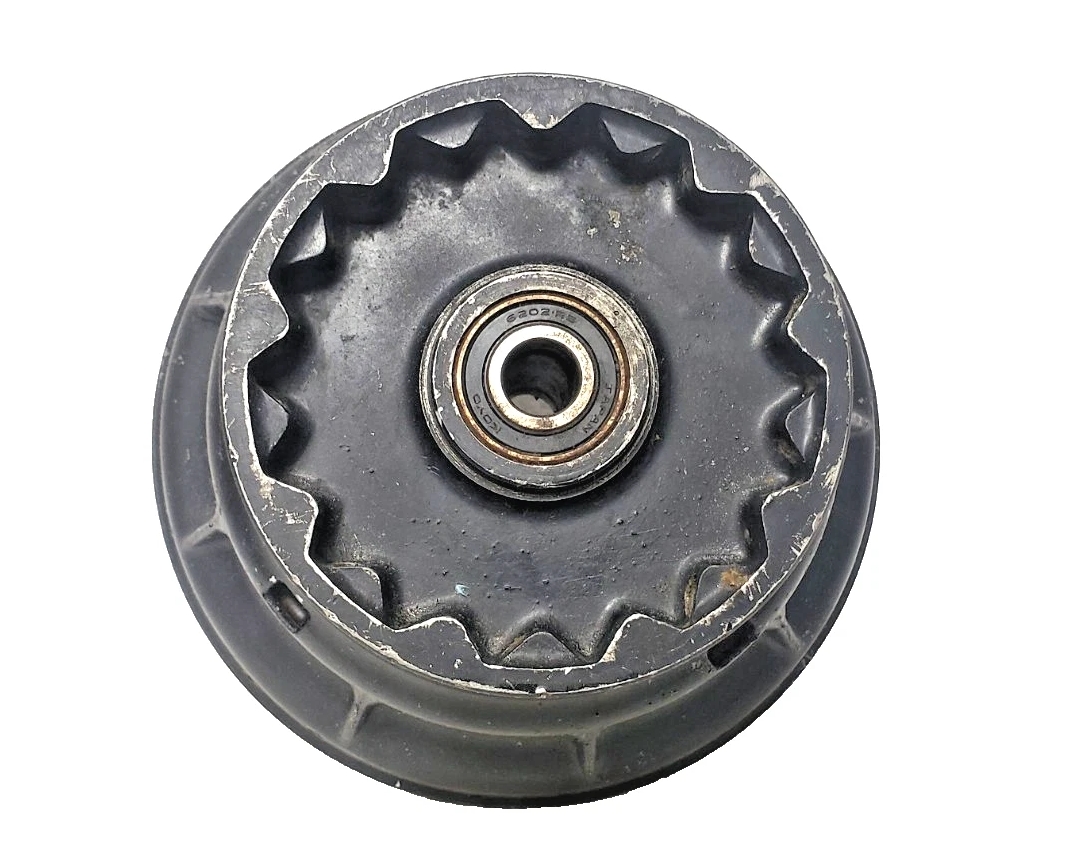
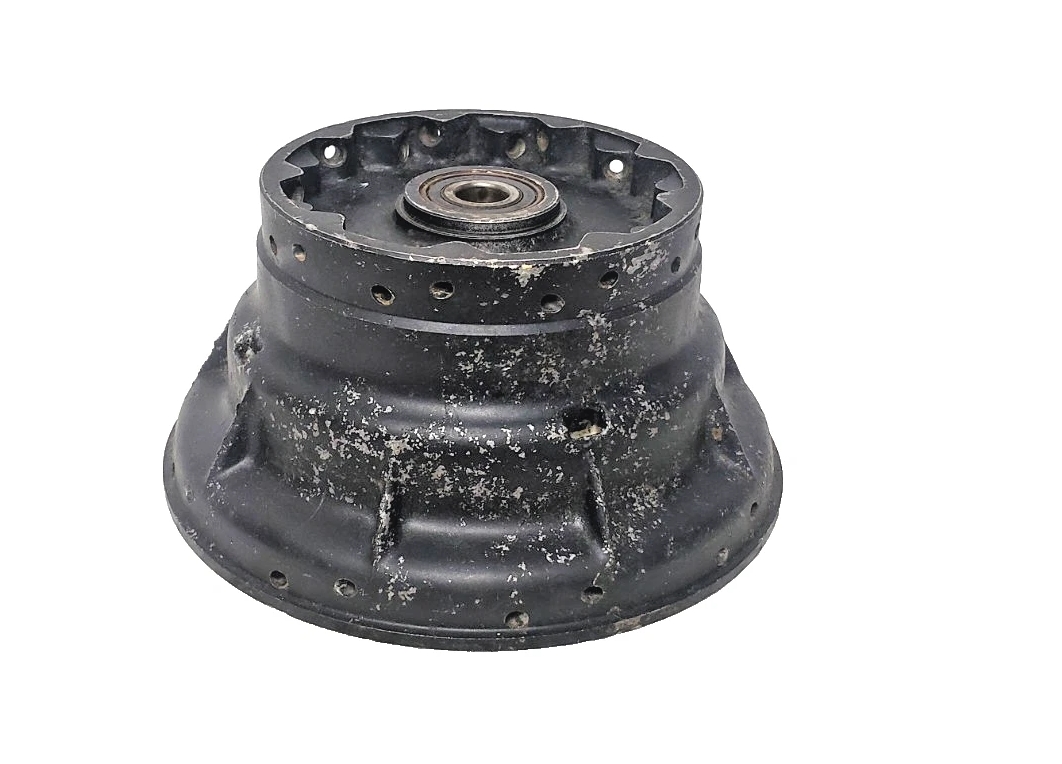
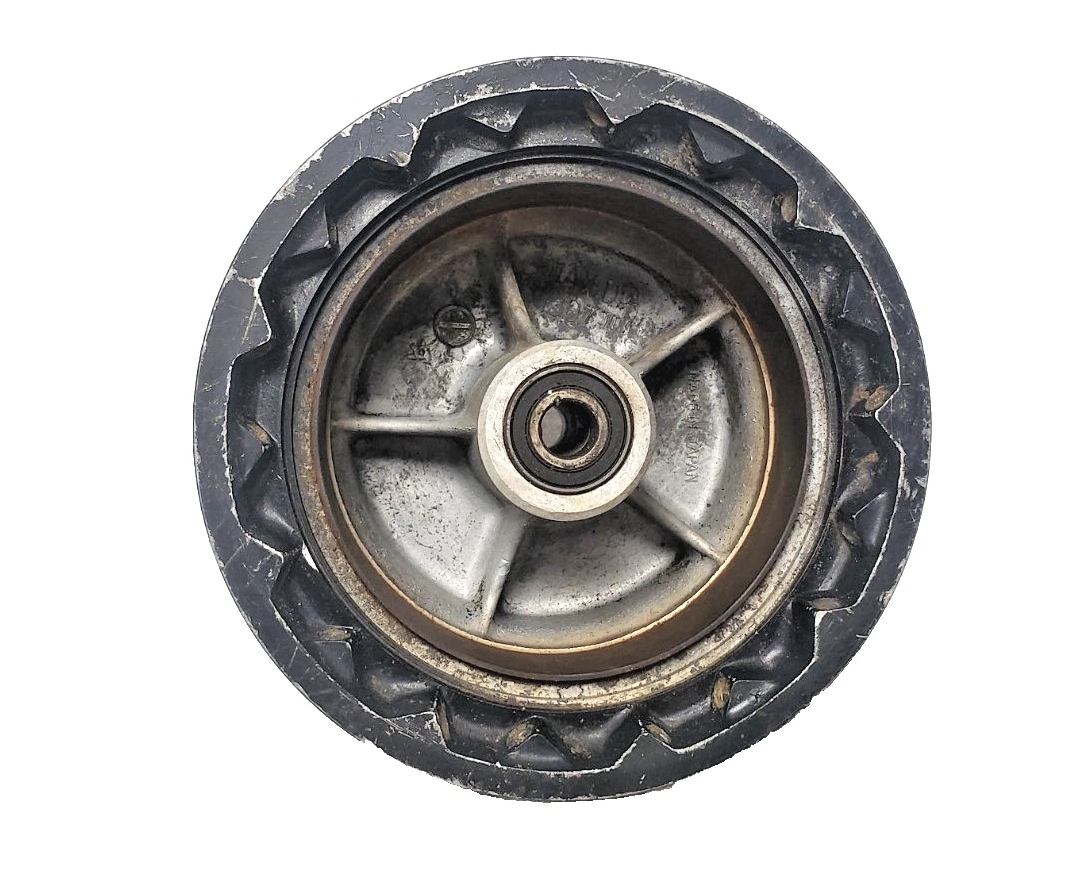
They look like this: (the black hub here, is the hub from one of these wheels)

NOTE: The maker of these hub adapters do it in their spare time and is not a business. If you need something fast, make the stuff yourself.

They were designed from the very set I tested. The picture is actually "the" 1st set ever made and that was my hub.

The drawback to these: They are an "axle-through-hub" option in the rear. This means, to have your car be 42 inches wide (wheel edge to wheel edge) you will need a 44" axle. This also means the standard differential (stanton inc., Peerless Differential 1" OD x 38" long Axle Model 141-D # 794102) and bought here:

... will not be wide enough to make your car 42" wide. It will be 36" wide, if the diff (in stock form) is used with these wheels and adapters.

To fix that, you'll need different shafts in the diff... so see staton for that. Get the longer shafts, yes?

Yes.

Just email em and say you want the ones that are 2 inches longer! That'll put your wheels (if this option is used) at 40.

Problem solved.

IF, you go with this option, be sure to get the right bearings that fit your front axles (spindles). You will have to take out the bearings that come in the wheels when you buy them. The bearings have an inner diameter of 15 MM and won't fit anything you use.

(that means don't use 15 MM axles folks... you'll bend em)

The two known bearings are:

1. for a 5/8" spindle, get bearing #99502H (most common bearing in the known universe) here:

2. for a 3/4" spindle, get bearing #6202-2RS-12 here:

Regional Disclaimer: The wheels that look identical to these which are used in the United Kingdom have a reported GOOD success rate with no reported issues. It is entirely possible that the wheels they use are actually a different manufacturer than the ones found in the States.

Caution: These wheels are ok for light use. They are not super strong and you should consider that. We tested these and if the spokes are tightened too much... the nipples started pulling through the rim holes slightly.

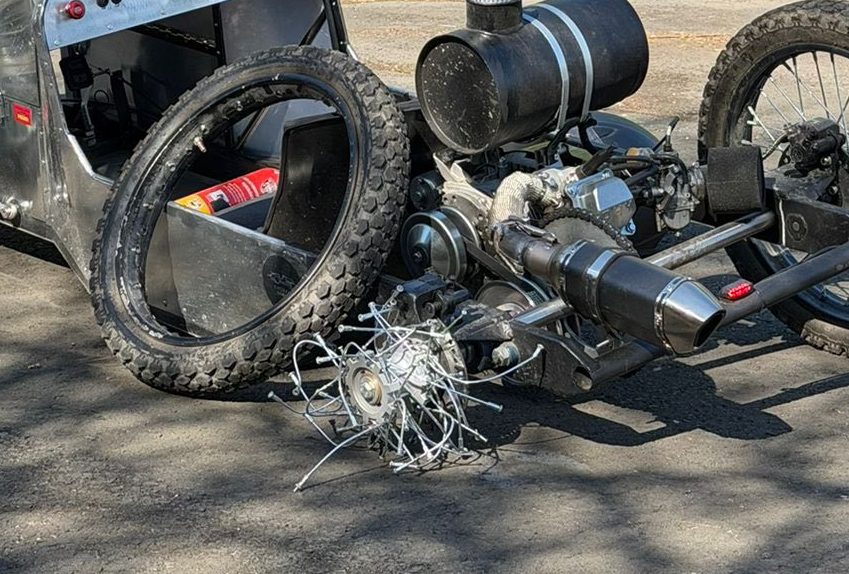
Can you use them? Yes. Should you? Yes. Should you beat on them like you're racing? No. Get better wheels. These will not last under harsh conditions for long. (we destroyed one in a day under hard use. Once, when someone's front axle failed.. a wheel was drug under the car. Most of the inner spokes pulled straight through the rim when that happened. We think they buried it in the desert. We've not seen it since. ;)


In the end of this option, the cost of wheels, adapters and bearings of this type would be: (keeping in mind that all prices were "at the time of this writing" and change over time... usually going higher in the end)
4 wheels = 320.00 + bearings 80.00 + adapters 185.00 = $585.00. That's not including tires. Add tires at a common 50 a tire and tubes at 15... you're at $845.00... and that's the cheapest "NEW" wheels option using all new parts.


... not including shipping.


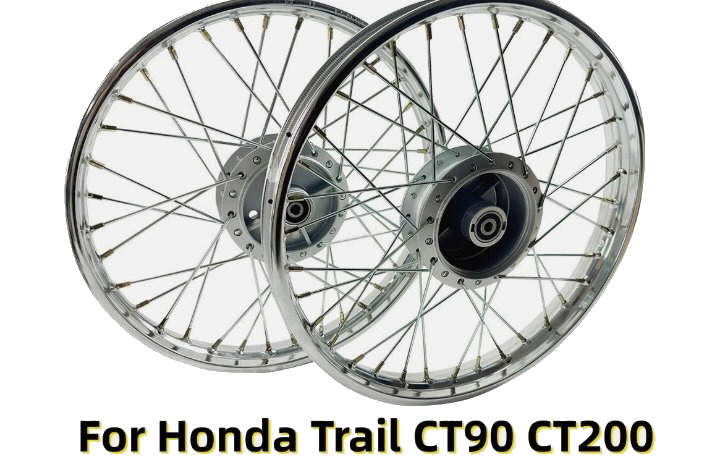
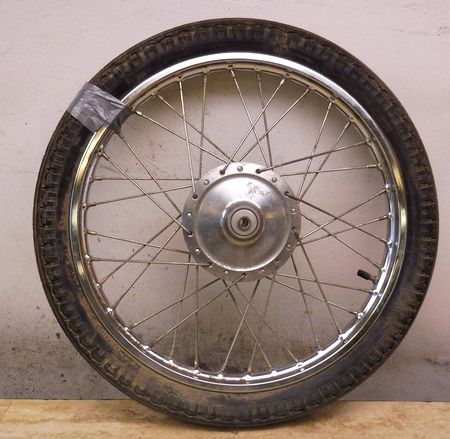
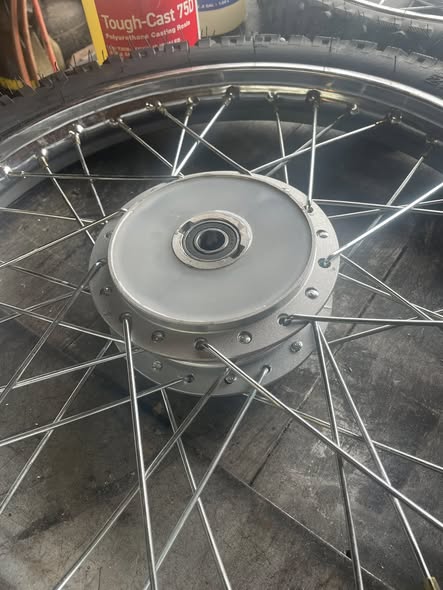
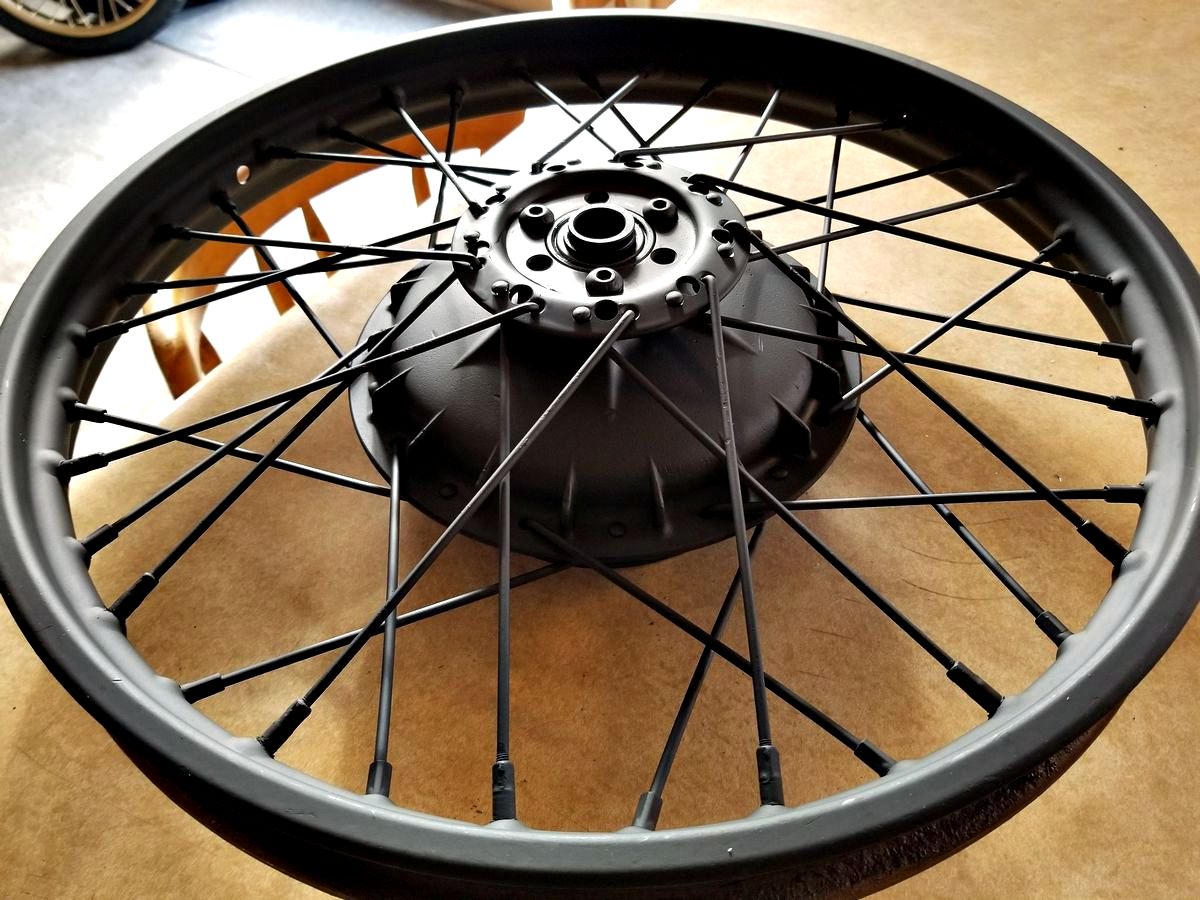
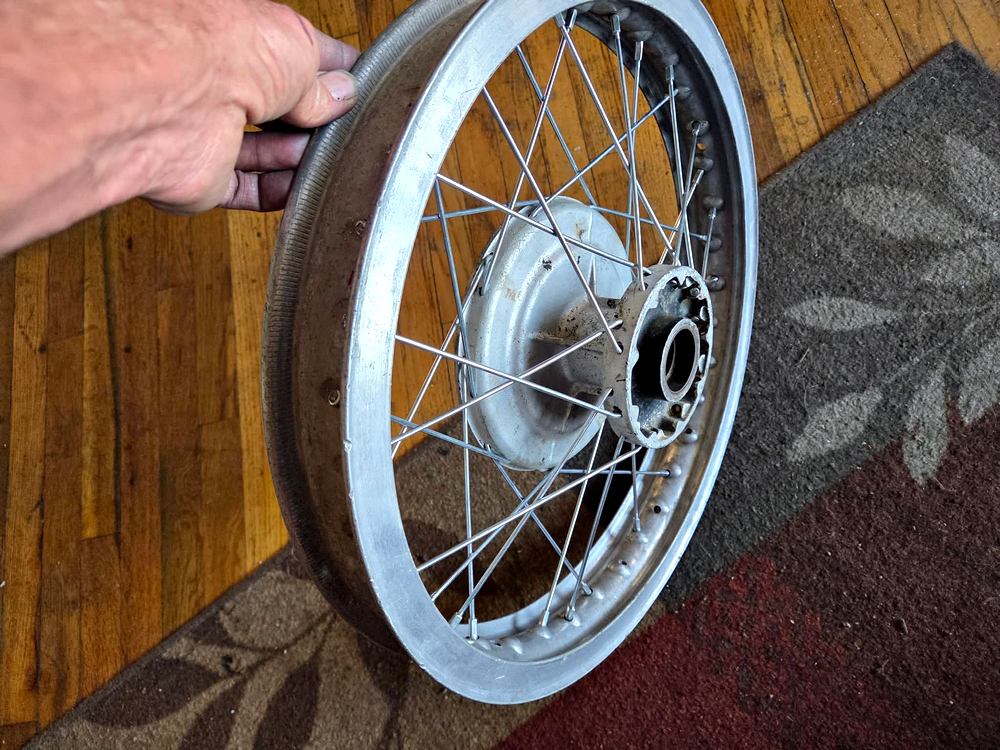
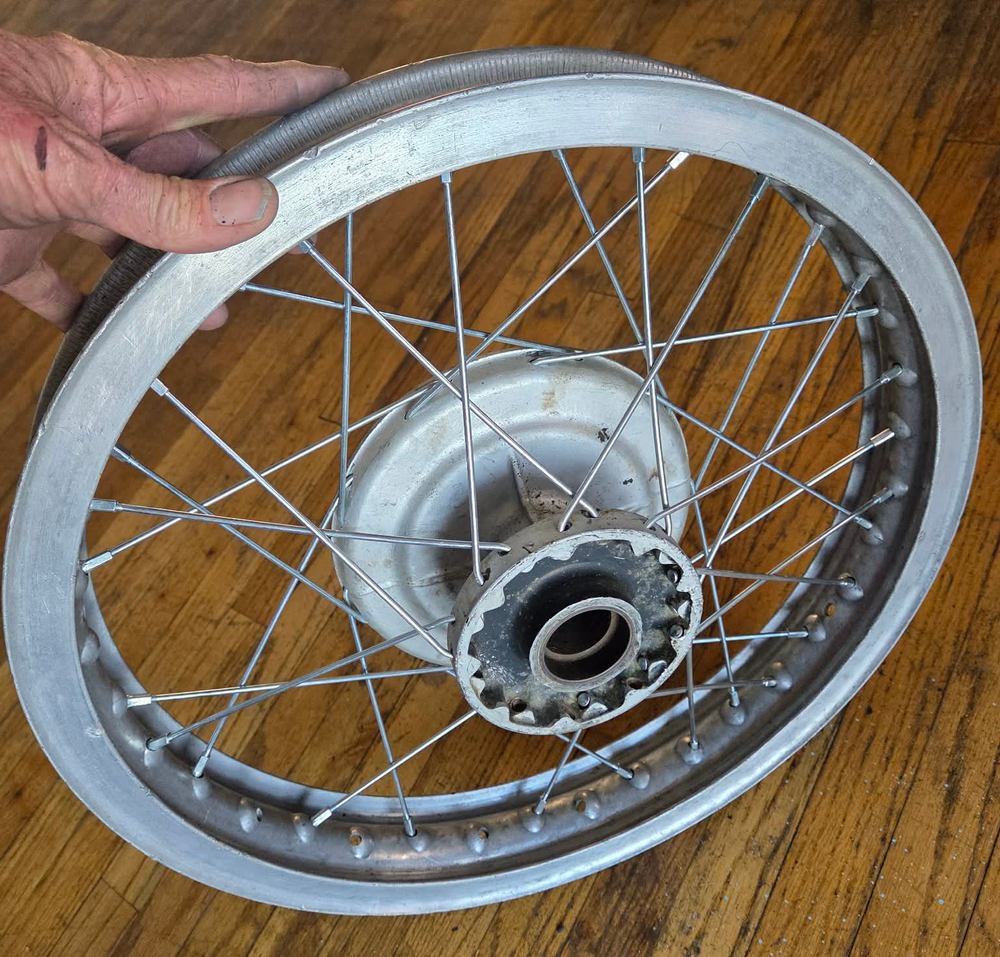
The next option, and extremely common: The re-pop versions of the CT90 wheel. They're new and can be bought in sets. They look like this, and are 17 x 1.40.


(by two sets... 2 rears, 2 fronts)

Now... there are a lot of sellers and not all of these re-pop wheels are the same.

They're just not.

Most, are cheap... and weak.

You will want: THESE wheels if you want them to last. They're the known "Tough" wheel.

The bearings for these are:
1. for a 3/4" spindle, get bearing #MR190537 LLB C-3 HERE:

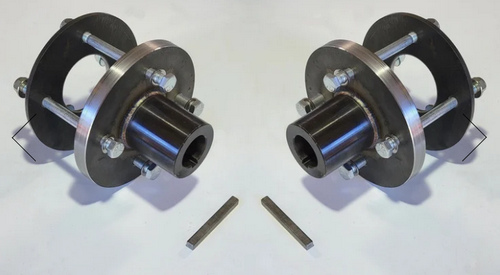
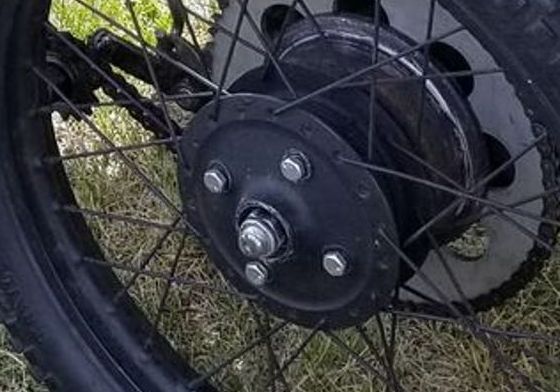
Then, the rear hub adapters for them and you're on your way. They look like this:


These adapters were based off of the original Vintage Kart Company hubs. It is possible to find them on used sets people sell, but are no longer made.

You can get them HERE They are 230.00.
NOTE: The maker of these hub adapters do it in their spare time and is not a business. If you need something fast, make the stuff yourself.

In the end of this option, the cost of wheels, adapters and bearings of this type would be: (keeping in mind that all prices were "at the time of this writing" and change over time... usually going higher in the end)
4 wheels = 488.88 + bearings 60.00 + adapters 230.00 = $778.00. That's not including tires. Add tires at a common 50 a tire and tubes at 15... you're at $1038.00... and that's the next cheapest "NEW" wheels option using all new parts.


... "some" of that, includes shipping.

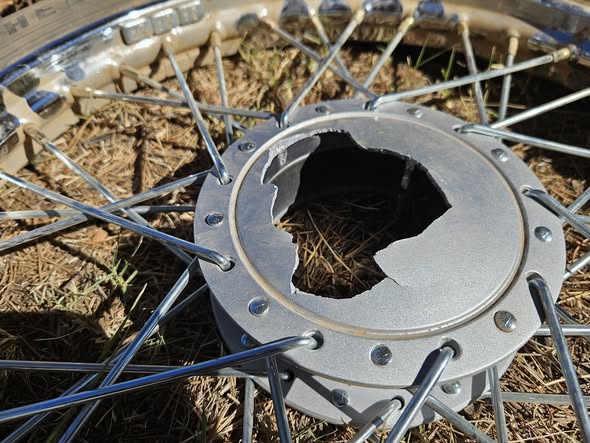
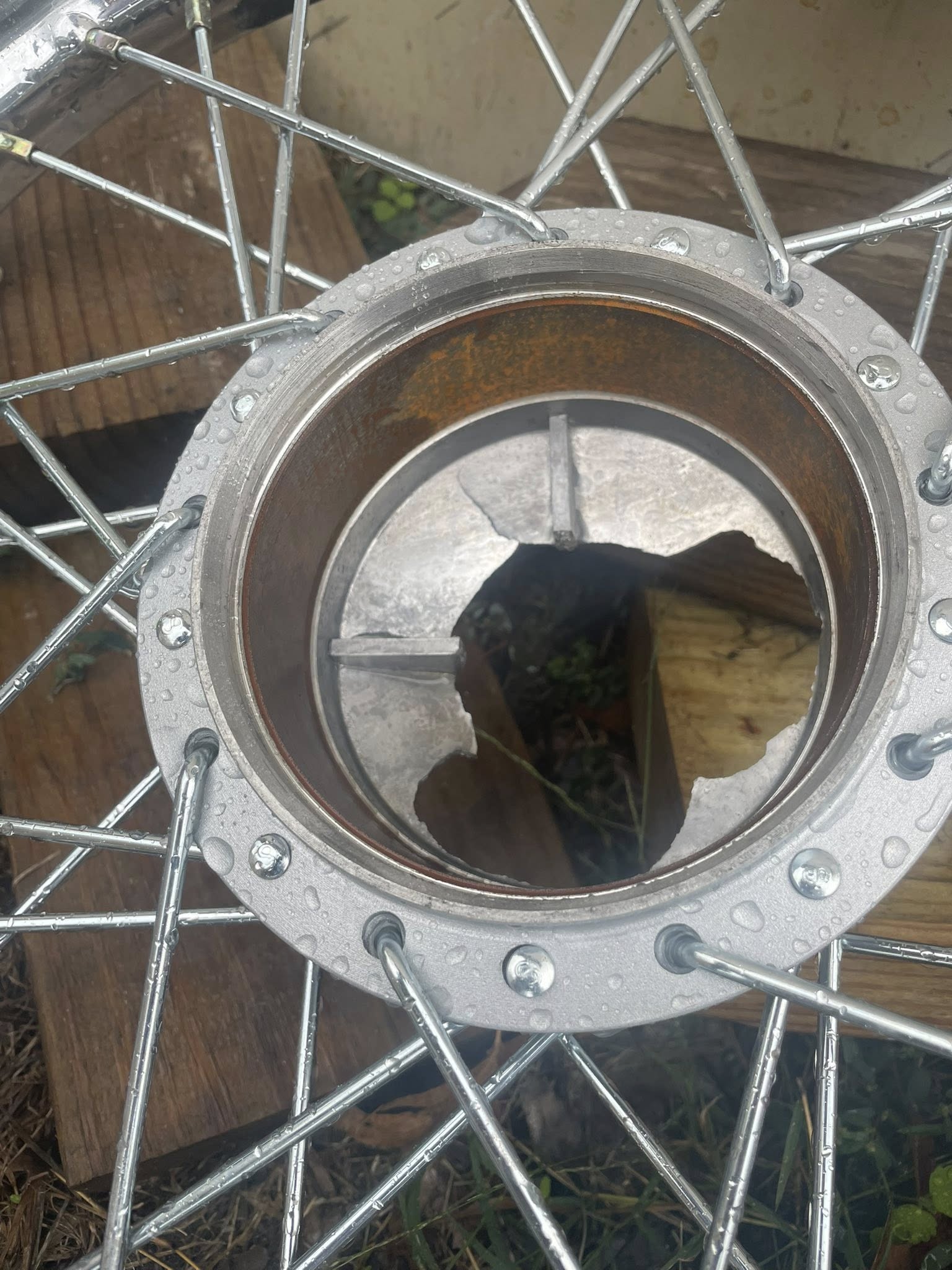
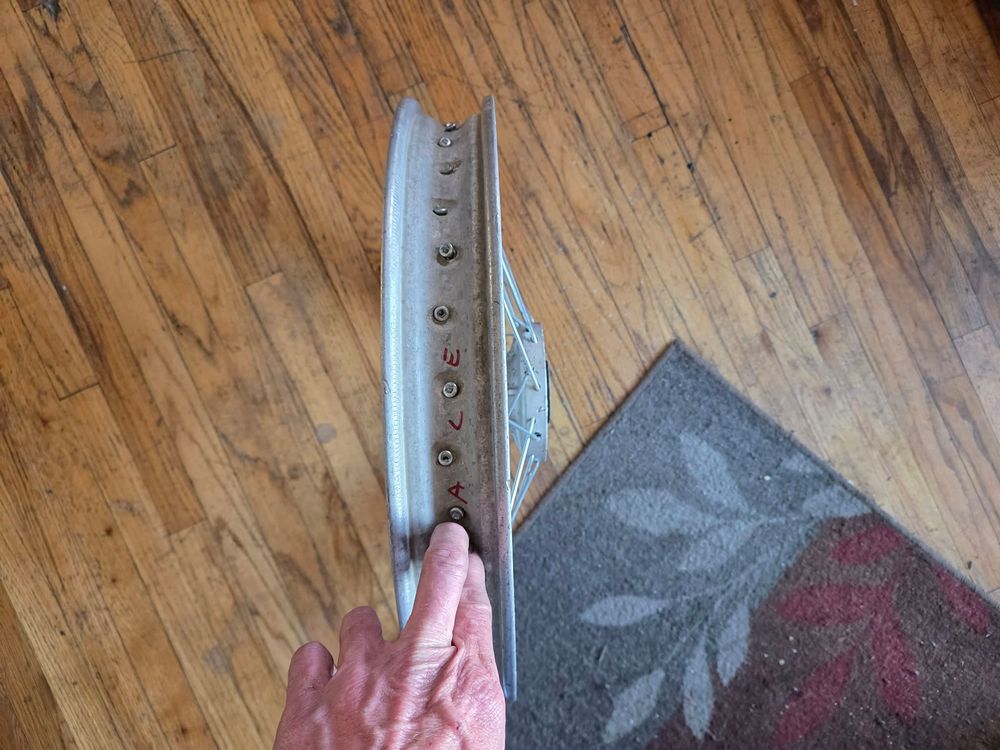
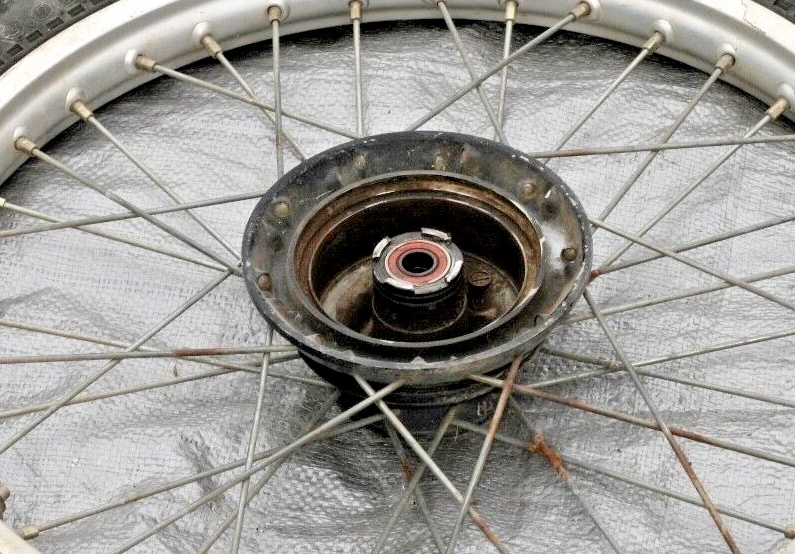
Notes about the re-pop CT90 wheel. IF, the rim has "UNION CYCLE" stamped on it, this is a tough wheel and good. If it does not, you may have a cheaper version of the re-pop CT90 wheel. Be careful with the cheaper ones, the hubs are known to blow up on hard use or cornering hard. (the cheaper wheel rim often has 17 x 1.40 only, stamped in it)

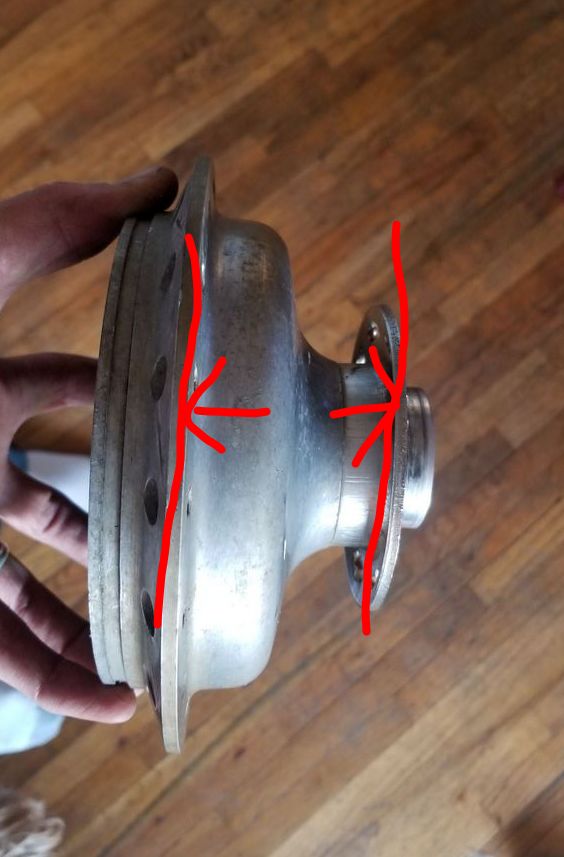
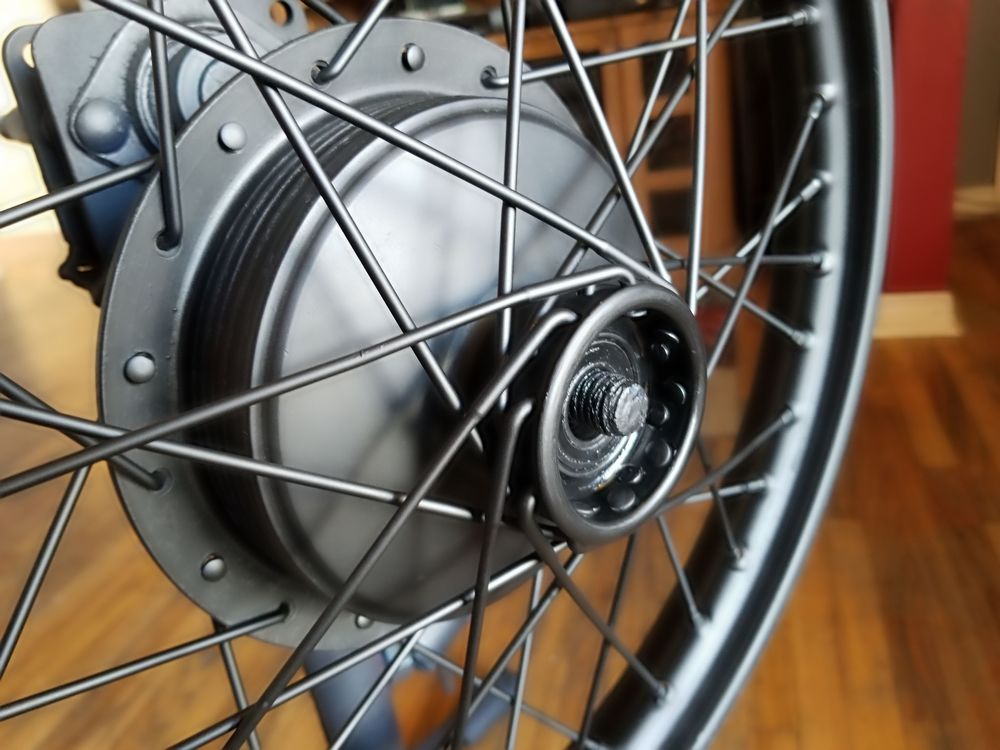
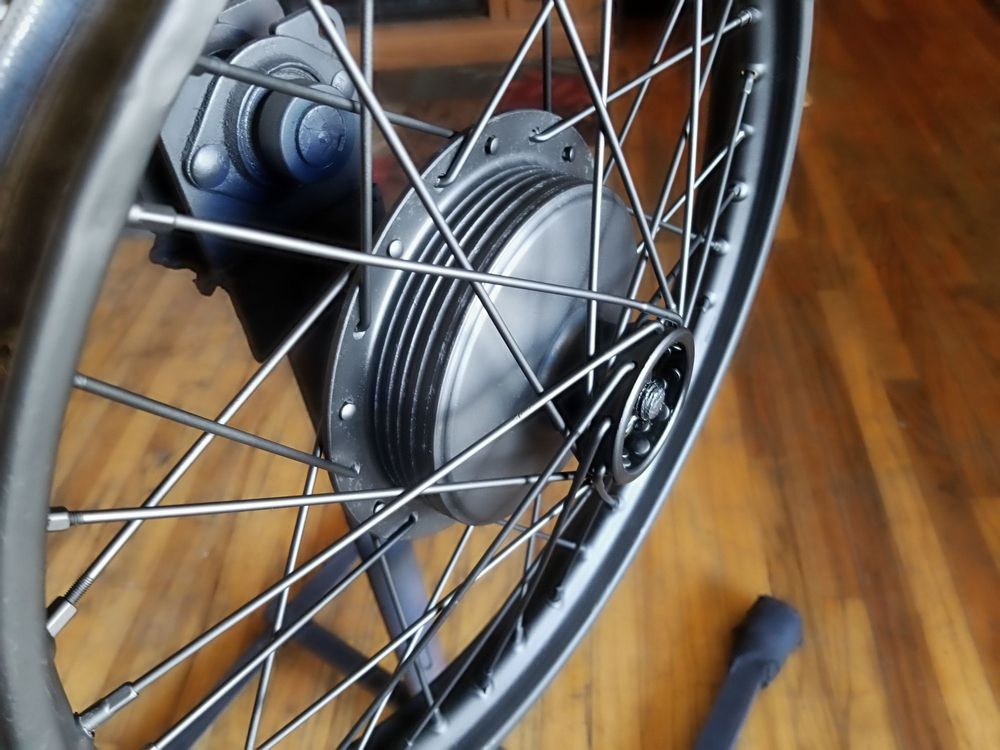
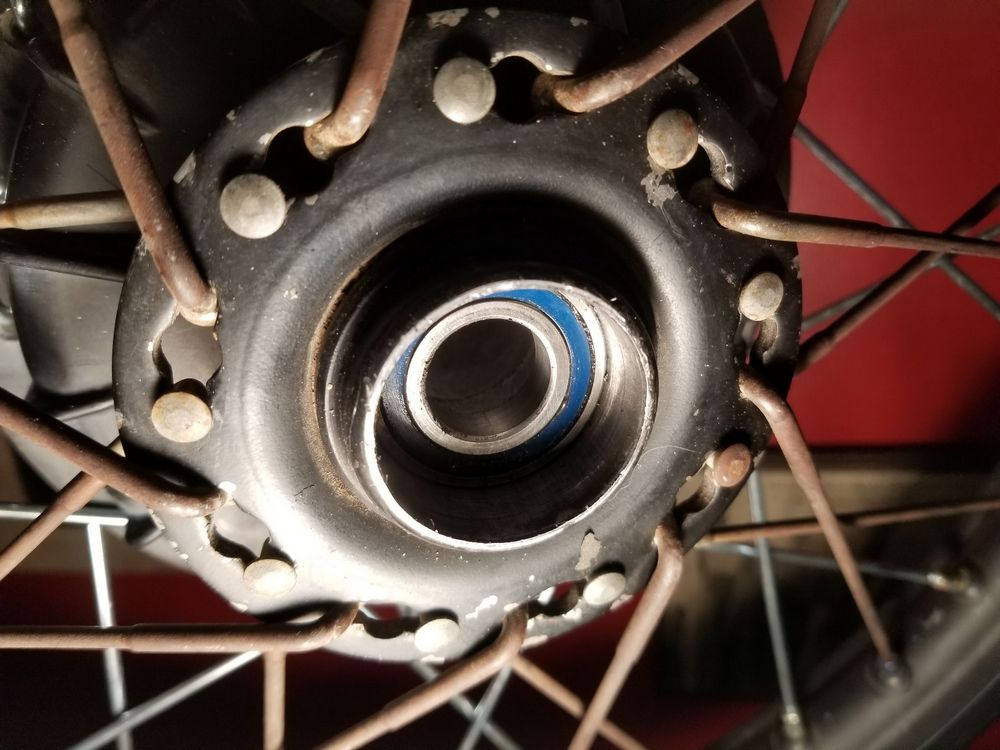
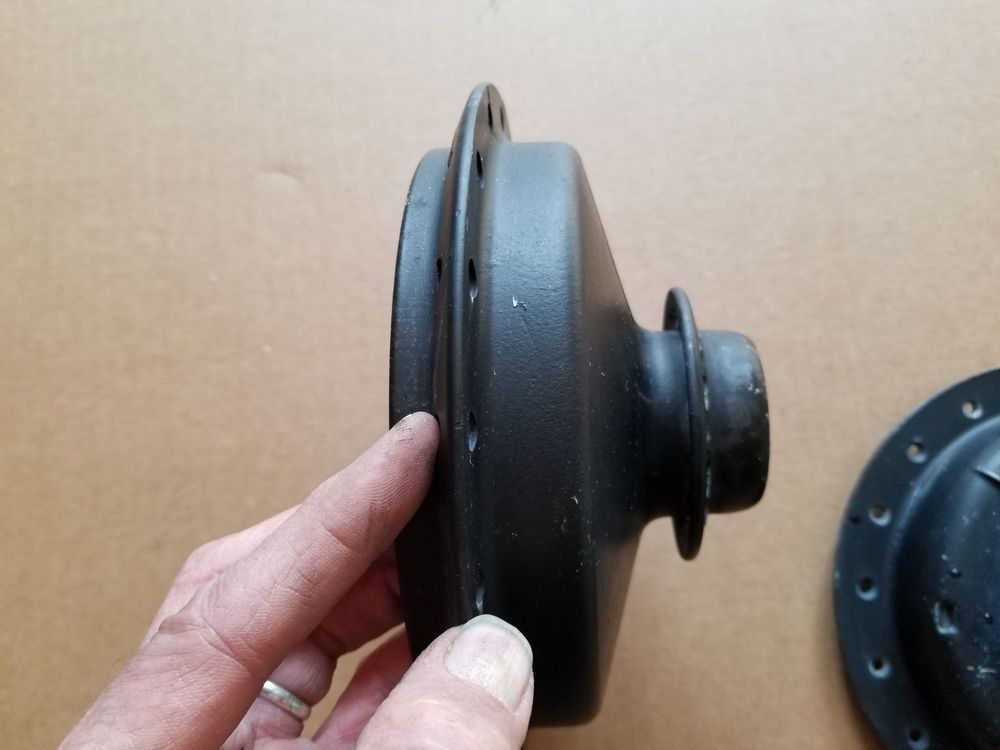
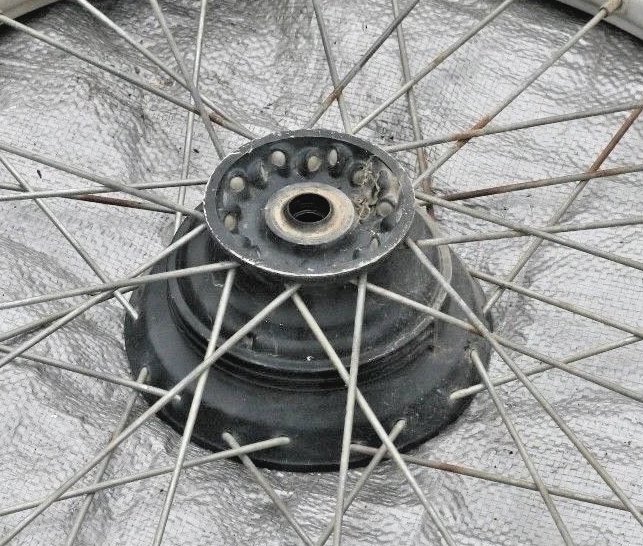
Here's a picture of the weak thin hub that comes on the cheap wheels that exploded. Note the thin construction.


Actual CT90 Hubs are TWICE that.

We took one of these weak hubs and compared it to an OEM CT 90 hub.

Here's the differences. Let's get scientific about it.

1. The OEM hub, is thicker and heavier

2. The sound: Yes, we hit each hub (free of the wheel) with a wrench to listen to it. The higher the pitch, the denser the metal yes? This is science remember?

OEM Honda: Very high pitched.

Cheap one: Not as high pitched, not even close.

3. We drilled through the main center portion and found the thickness of the OEM hub to be nearly twice that of the cheaper CT90 knockoff wheel.

Thus, scientifically, it's inferrior and scary.

Does it work for CT90 bikes? You bet it does.

Cyclekarts? Sure... but won't last all that long under harder use. The picture above, was from a street use event with few bumps... on a car that doesn't drive all that much.

Fun fact: Union Cycle, is actually made by Yamaha and were the wheels used on the ill-fated Vintage Kart Company Cars. (VKC cars) I actually still own 2 sets and they've never failed.


17" Tire sizes Back to Top


The tire sizes used on common cyclekarts range from 17 x 2.00, to 17 x 2.75 in most cases. 2.75 is "THE" most common thing. Start there. What size you choose is up to you. It should fall in line with what you're making.

Some have used 3.0 wide in special cases. There's a lot of tires out there. Remember though, the "MORE" tire you have, the more weight you have acting on a limited axle... (and whatever else you built) and can bend things if they're just too much. These are motorcycle wheels, and some 30 rotating pounds acting on far too small attachments (at times)... and well, stuff bends when there's too much acting on it.


Tires Back to Top
Known tires: (Not all, we're sure there's many we've missed) Tires - 17"

Known tires best suited for CycleKarts: (in order from best overall to worst - top part of list

Shinko SR241 - The most popular CK Tire hands down. Excellent overall tire with grip. Equally good on street or dirt. Soft Rubber, comes 17 x 2.00 through 3.00. Decent road life and looks the part.

IRC NR21 - Good street tire, soft rubber, side walls are thin. Usless on dirt. Comes in 17 x 2.25, 2.75 and 3.00

Michelin Gazelle M62 - on the heavy side, useless on dirt... but if worn down to the "happy spot" becomes one well performing street tire. Discontinued but can be found on ebay sometimes used.

Michelin City Extra - a very very good tire in most sizes. Replaced the Gazelle and looks darn good.

Duro HF308 2.75x17 41P (look at the 307 too) - Good street tire and hard packed dirt. Performance good. Life Expectancy: unknown..

IRC NR53 (t10083) - 17 x 2.75, street tire. Excellent look, good grip, easy to mount.

Shinko 244 Dual Sport 38L - 17 x 2.50 (is a 2.50, but is big.... looks like a 2.75 mounted)

IRC GP1 - common tire on the 2022 honda trail bikes. Usual size is 17 x 3.00. A taller tire, useful on Edwardian builds with 17" wheels.

Yokahama Y-962 - dual sport tire. Would be comparable to the Shinko SR241 if you find some. Came in many sizes, including 17 x 2.75 Discontinued but can be found on ebay sometimes.

Sava MC11 moped racing tire - 17 x 2.00 through 2.75, kick ass street performer, useless on dirt.

Sava B4 moped tire - 17 x 2.25 (possibly other sizes) Good on street, dirt... mmm, not so much.

IRC TR1 - Basically the same as the Shinko SR241 tread, comes in most sizes.

Michelin City Pro - Initially sporty looking tire (probably why some bought them and may be disontinued), pain in the ass to mount, harder rubber and heavy. A stiff stiff tire initially, Useless in any kind of performance arena unless worn down to some unknown and elusive "happy place." Useless on dirt... or anywhere if you want performance, looks nothing like a tire a period car would use.


Other tires

IRC NR-53 UNIVERSAL SCOOTER/MOPED TIRE 2.75-17 41P TT

Shinko SR704 - 17 x 2.25

Heidenau K46 moped tire - 17 x 2.75

Heidenau K36 moped tire - 17 x 2.50

Heidenau K58 Moped Tire - 17 x 2.75

Cheng Shin SR704 Scooter/Moped Tire 225-17, unknown performance, but they do fit.

Puch maxi-friendly KNOBBY party in 17 x 2.25

Dunlop Geomax MX 3SF 70/100-17 (low profile tire) about the same specs as a 17x275 tire. Full dirt knobby tire, stiff rubber, fairly lightweight

Dunlop Geomax MX 33F 70/100-17 (higher profile tire than above, overall same otherwise as above.


AND of course, hey... just google 17 x 2.75 motorcycle tires (or scooter tires) you'll find plenty. Honda (and others) still make trail bikes that use our size... so there's options.

Other Thoughts:

ZAS distributors on Ebay, sometimes has oddball sets of tires that are different from over seas... and hundreds of others. We're not digging that far. You know the sizes... go find them.

Adornments:

White Walls

There are some, made by Sava. However quite rare to see whitewalls on anything cyclekart related. Few cars would pull off the look. Look up Port-O-Wall. They're white wall rubber inserts that give you white walls, for far less. (keep in mind, few cars of the period actually had white walls and installing them on a car that did not have them isn't quite correct.)

Spinners:

if your inspiration car didn't have em... yours shouldn't either.

Tire Sizes other than 17's. Back to Top


In some instances, certain cyclekarts have 16 inch or even 18 inch wheels. This all depends on the car being made. This does not mean you choose 16's or 18's automatically. Seeing cyclekarts are caricatures of actual cars, this would come into play.

16" would be more for sleek 1950's style racers with a taller and 3.0 wide tire to match the look, while 18's would fall in the edwardian realm as they're bigger, also with a 3.0 to 3.50 wide tire.

16" and 18" wheel options are a different animal.

The max rim width allowed in all of cyclekarting is a 1.85... and usually only Edwardian beasts use that. Once it's past there... you're just building a car at that point. So, few things for the edwardian arena in the 18" realm.

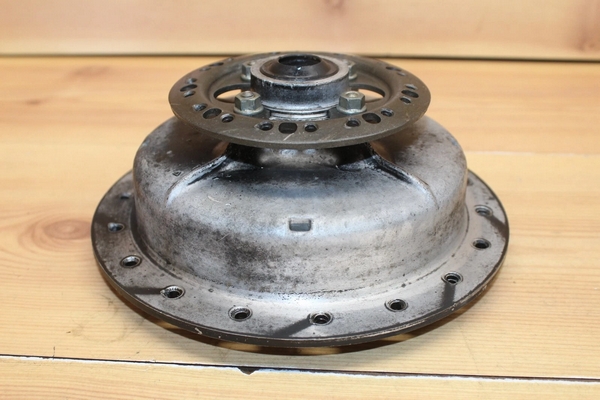
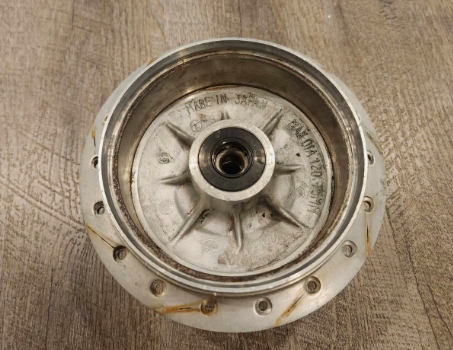
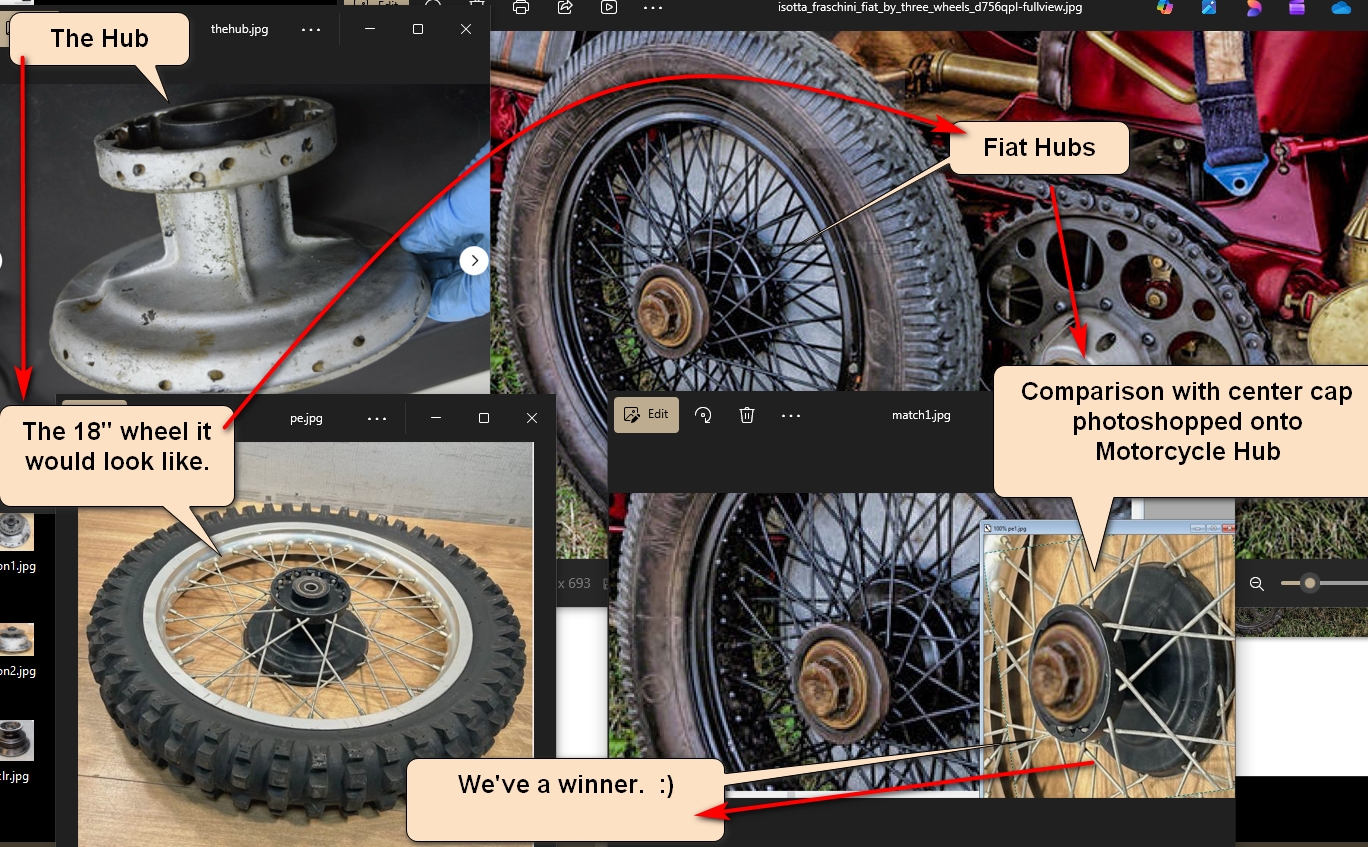
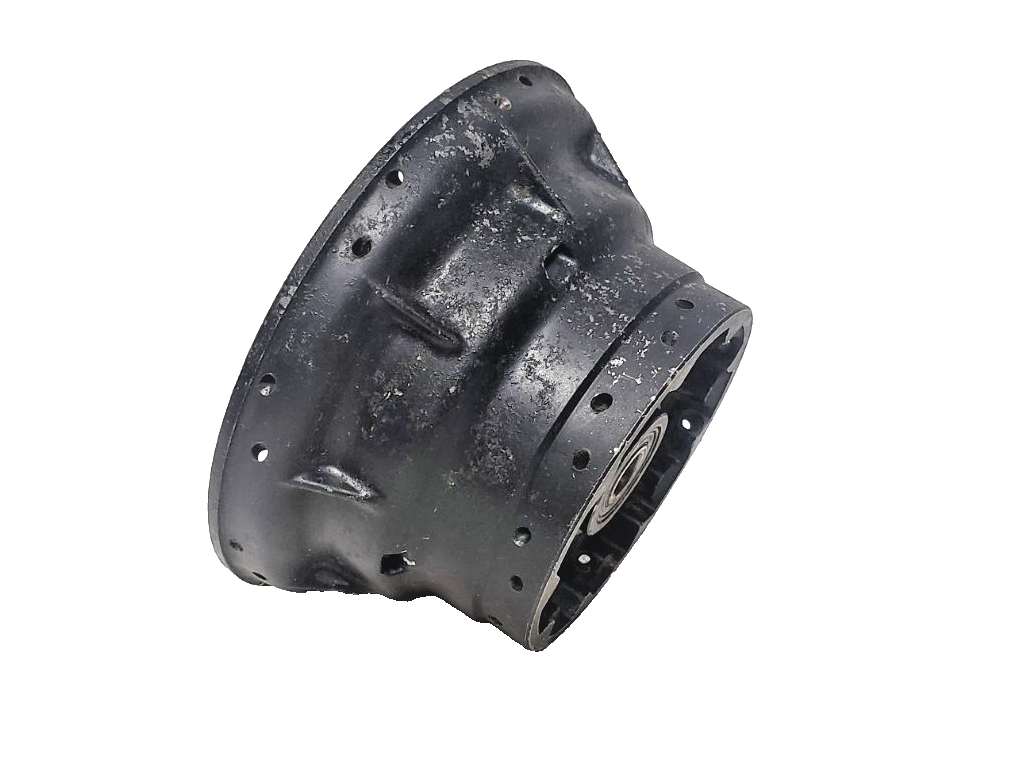
A good wheel that works well for the edwardians is one similar to the CT90. It was originally an 18" front wheel found on the late 60's Yamaha LS2 100 bikes.

The hub used on them allowed for 3 bearings as well making it pretty strong. Luckily, that hub used traveled with numerous yamaha models into the 1980's using different rims so... it's out there and simple to find. You have to dig. Yamaha models: LT2, DT100, AT1, CT1, HT1, TY175, CT3, MX100, TTR125 and CT2 had them on the front... and there are others!

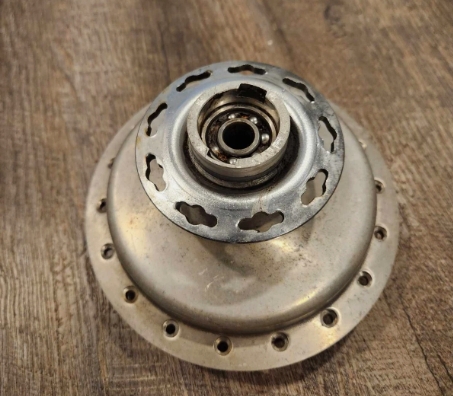
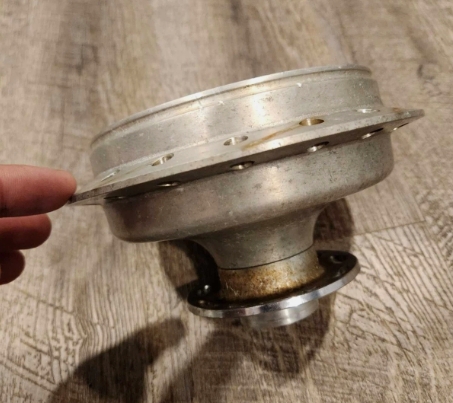
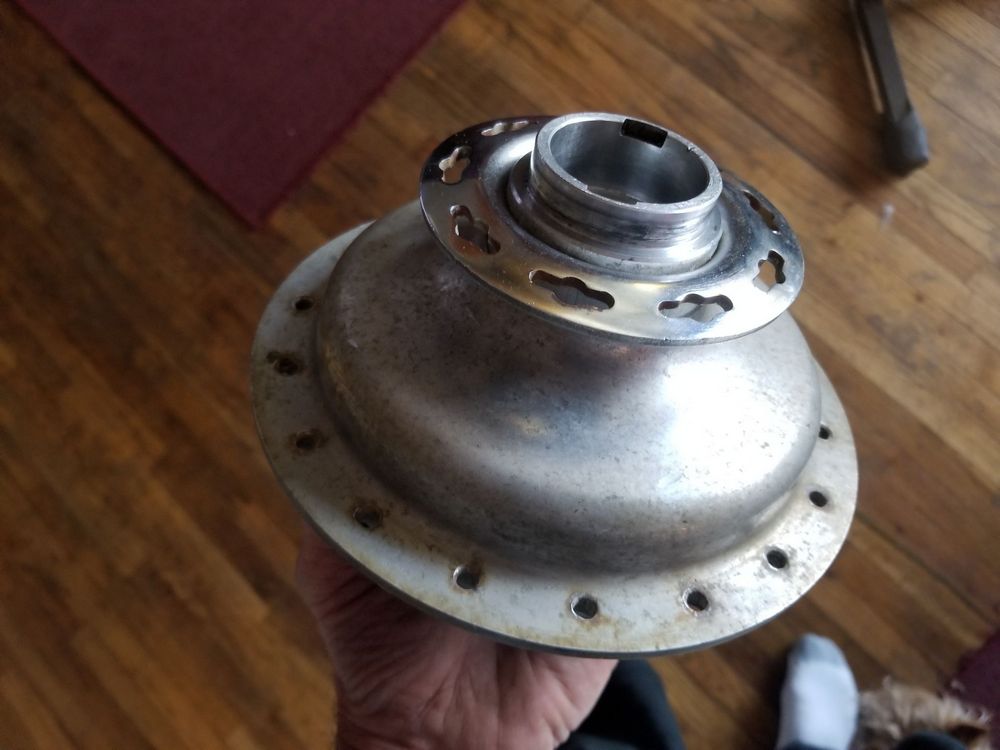
They look like this.


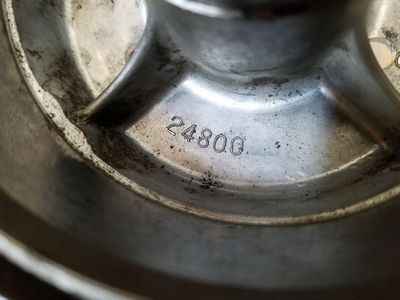
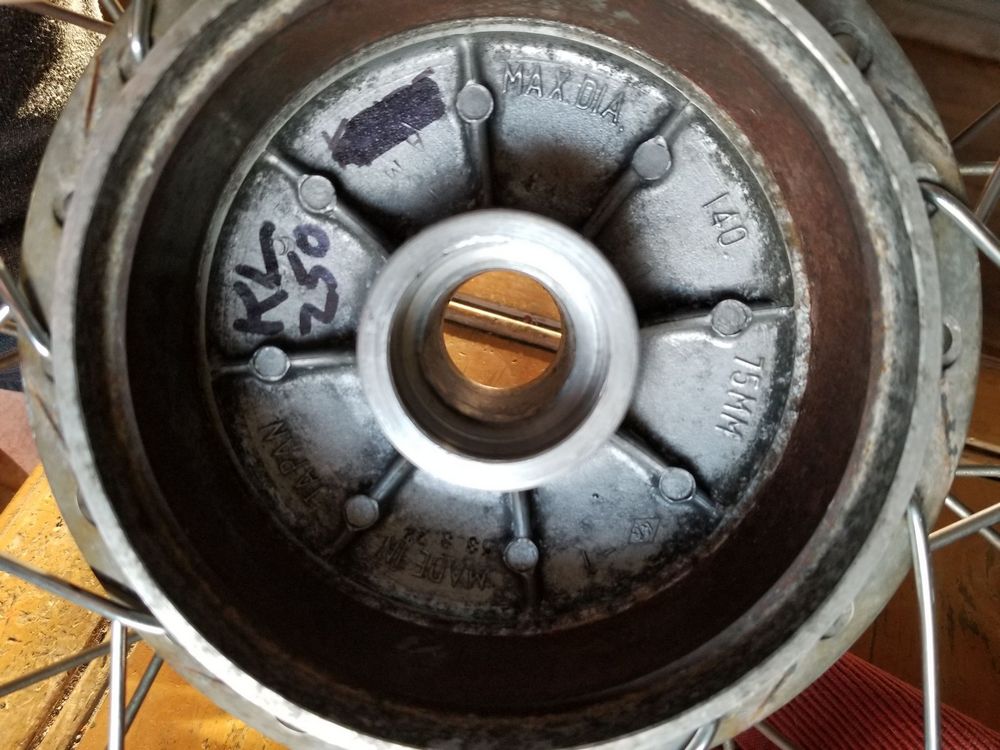
There's number in the hub... so you can find it on most bikes


It's got a nice look


An adapter is available


has a nice flat outer side


and looks good as a front, or a rear.

... and you lace it to any other rim if you want. This means, you could make up a strong 17 (or 16) with the proper spokes and it'll never break. These hubs are very strong.


Lacing CT90 Wheels Back to Top


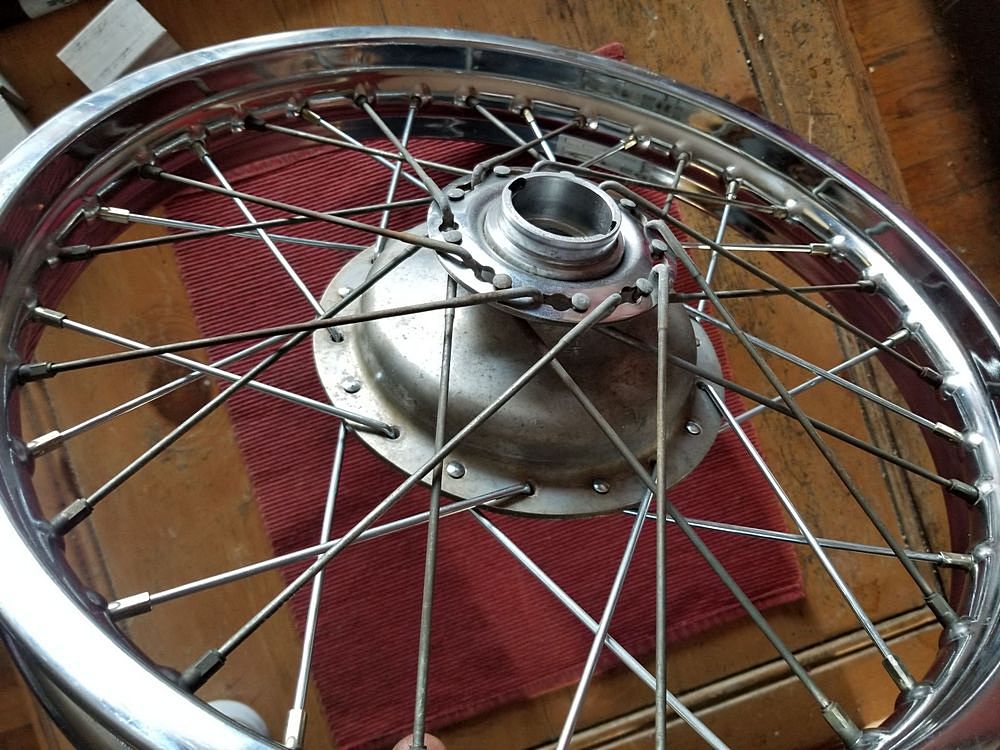
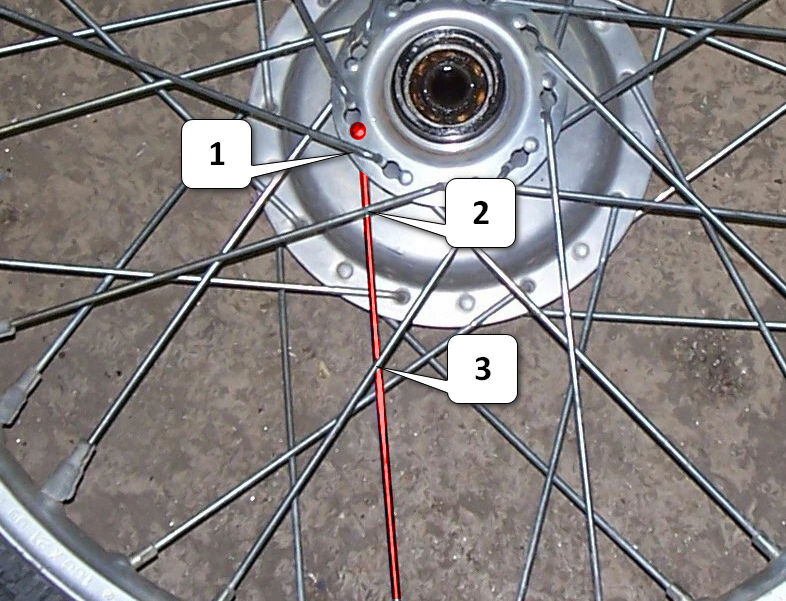
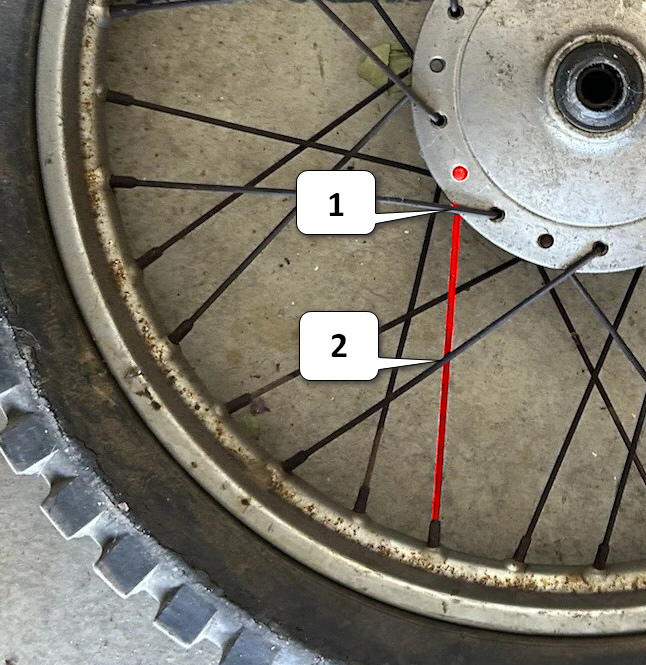
Lacing a common spoked wheel is not hard. All you have to be able to do, is count to 2, 4, and know the difference between the spokes used on the "usual" wheel. With the CT90 wheels, there are 2 different kinds of spokes. One has a right angle at the bend, the other is a 45 degree bend. The spokes with the Right angle, are the ones that go on the outside of the wheel, and are laced last.

Here's a video on it. Kelly wood's old video on lacing CT90 wheels


The Originals Back to Top
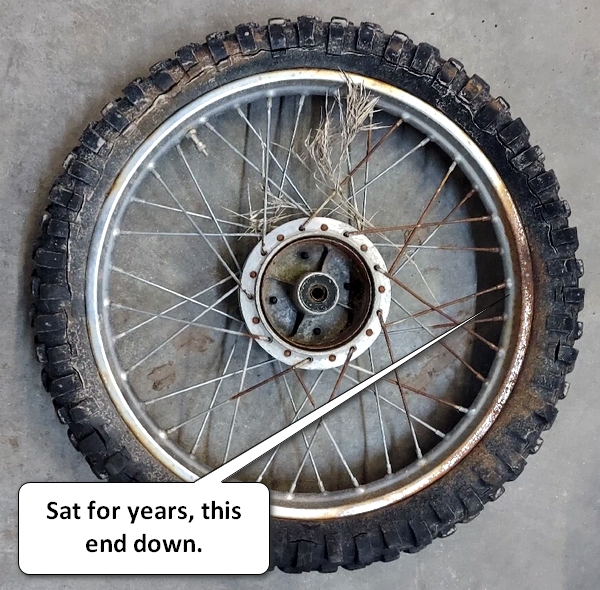
On a whim, at 5:44 PM 2/10/2026, we hit ebay and looked for the term CT90 Wheel. We set the filter to "used." The results were four pages of things. Among them, were 72... that's Seventy-Two, CT90 wheels in varying conditions. They ranged from 25 dollars, to 200. So when we thought about when people say "I can't find them," we wondered why. These results are common and CT90 wheels were made for a LONG TIME! There's hundreds of thousands of them out there.

Why'd they say that?

They wanted it for cheaper, that's why.

Now, historically OEM wheels are FAR stronger than modern reproduction wheels... and mating a motorcycle wheel to a 1" go kart axle isn't new. The original cyclekarters did it with less than we now have available to us.

... and their option still works to this very day. So, we start with the original OEM Trail 90 wheel. (ct90). This wheel, even with it's original skinny spokes, will still perform and be tough. Those 2 top options on this page may even lose the battle before the original OEM wheel does. We know many original cyclekarters that still use them. We've seen the wheels go through hell and never flinched.

Now in the year 2026, with a tad more power hungry folks, some have taken it upon themselves to lace the OEM wheels with bigger spokes. This resulted in a wheel that's nearly indestructable. Ask Steve Vinson... his original car sports OEM wheels with big spokes. They'll never break and that Vinson Viscount SPL has seen a mess of action.

Taking OEM wheels to that level though, requires you drilling out the rim and hub holes to handle the bigger spoke, or lacing it up isn't possible. That means get a drill.

So back to the basics. The original Cyclekart wheels were either trash wheels they found in dumpsters, or other wheels they found & made work. It was all custom at that time and they figured it out. Many of them weren't even CT90 wheels. "Some" just think they have to be because that's what "They" said.

The original way can still be done easily, every part is availale, and works.

So... let's explore how to find some.

1. Luck out. You find someone that was going to build a cyclekart and gave up. Sometimes this happens and you can get the whole set, adapters & all... for around 500 bucks. If they had tires too, a bonus. They're just trying to get rid of them, so... lucky you.

2. Ebay Route. Hit Ebay, your local "places" that sell things, find local CT90 Groups. Locate 2 front wheels and 2 rears. If you cannot, locate 2 front hubs and 2 rear hubs. Those hubs were on more than just the CT90's. You can buy the spokes for the wheels easily and they don't cost that much. If you only find hubs, then fine... Now go looking for ANY, 17 x 1.40 rim. Those came on so many bikes it's silly. Or, hey, buy new ones. They don't cost that much. So, average hub is around 25 to 50 bucks. That's 200'ish. New spokes, even cheap ones (that do work pretty well) are 30 bucks a set. That's 120'ish. Rims, 50 each, new. That's another 200. So, we're at 520 at this point. (see where we're headed here? Wheels Cost Money.)

3.

To be written & continued: 6:00 PM 2/9/2026


CUSTOM Back to Top


(TO BE EDITED still... 6:27 PM 2/9/2026)

This where some (like me and others) got creative and made wheels from existing things not commonly used in the average builds. Whether it was a look we went for, or just wanting OEM strength... we went that way because older things are simply built stronger. Everyone knows this.

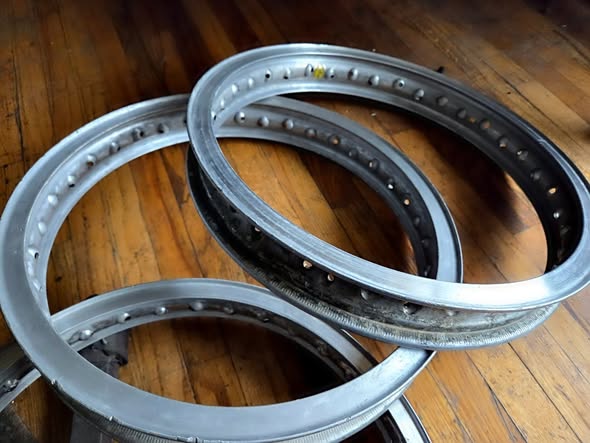
In the custom realm, it's good to know that rims, were not specifically branded things. Only the hubs were specific to the manufacturer. Rims, were made by manufacturers like D.I.D., Takasago, Akront, and the like. If you're going to build your own wheel, finding strong OEM 17" rims, becomes far simpler and they're everywhere. Drawbacks to that: Some old rims are junk and you gotta do your homework.

But, if you want quality... OEM stuff will out perform most modern things to this very day.

In reality, there were thousands of motorcycles with a 17" wheel. You can find them if you know what you're looking for... and it's helpful to know what bikes had 17" rims.

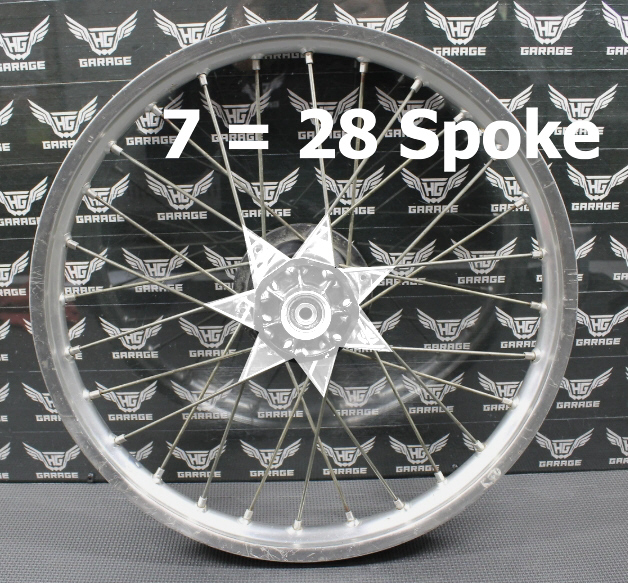
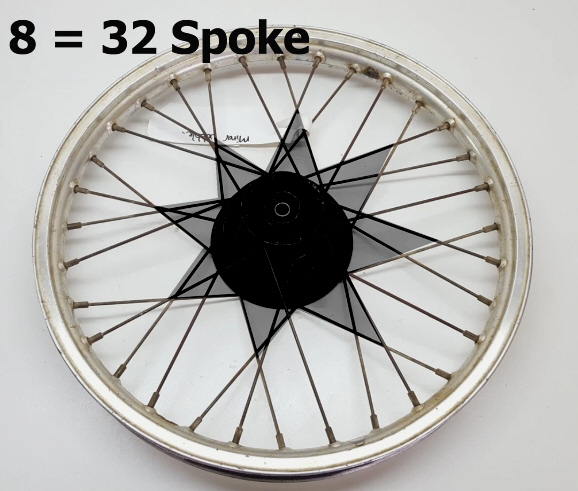
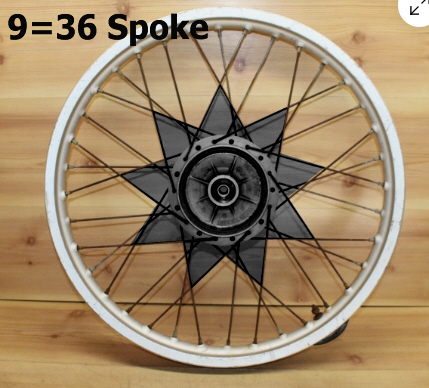
So, here: Go find out. It's the lists of bikes, and what size wheel they had. This aids in the hunt for rims when you're about looking on Ebay & such. Just remember to count the points of the star formed by the spokes. A 9 point is a 36 spoke, an 8 point is 32, and a 7 point is 28. The 32 is the more rare however... the modern cheap motocross (or pitbike) wheel is also 32. So, hubs from them match up to an old OEM 32 spoke aluminum rim.

Reference arena: (wanna know what bikes came with what? Look here. :) Back to Top
Yep, this page rules... :)

Helpful when finding what size wheel a bike had. (really useful for the resourceful custom wheel build, or someone looking for the "hoop" of an OEM bike... helps ya on Ebay folks)

Yamaha
Yamaha Off Road
Yamaha Street

Suzuki
Suzuki Off Road
Suzuki Street

Kawasaki
Kawasaki Off Road
Kawasaki Street

KTM
KTM Off Road

Honda
Honda Off Road
Honda Street


Knowing all that...

One could get really creative and use the aluminum wheeels from the mid 80's and 90s found on KX80, RM80, CR80 and YZ80 dirt bike front wheels. Lots of them hada 17 x 1.40 or 17 x 1.60. All you have to do is make an adapter and find the right bearing. (Steer clear of Suzuki, the front hub bearings are VERY small.) Yamaha and Kawasaki are your best bets with the latter being a favorite.

Potential cost, taking into account availability: 50 -100 per complete wheel on ebay (they're aluminum.. no real rust issue) max 400 for rims, 200 for tires, tubes 15.00 each, bearings 32, and whatever you come up with for an adapter, say 100... IS: 800'ish.

Cheaper than the top options too!

Bonus: aluminums drop 2+ lbs per wheel and if trued right, area amazingly strong. Rear wheels, just make sure to run the axle all the way though the hub, do not bolt rear adapter to just the disc brake mounts.. This includes the 28, 32 and 36 spoke versions.

Worth noting: Wheels like these are competition off road wheels, they are strong and often have quite beefy spokes and the aluminum rim is a force all by itself. Even if they have little cracks, they still work.

Which brings us to the totally custom deal. By far the most expensive but cool. 70 Minimum for a good rim, 30 for cheap spokes (per wheel)... (100 if you want good ones) there's 400 already in spokes... make your own hub... LOL.. 1 in 1000 will even try it. So: Material, bearings, tires & tubes... If done right, make your own wheels will cost you: Material for the hub 100 or so + 280 for rims + 400 good spokes + 140 for tires + 60 for tubes, 32 for bearings and that's 1012 dollars.

One Thousand, twelve dollars. Entire cyclekarts have been made for less and if you don't have the facilities to get it done yourself, add some random ridiculous figure to that to have someone make parts of that snazzy plan of yours.. If you own the machine shop... take away a smidge.

But...this cost is still in line with what you'll pay if you take the first options.

Some examples of custom wheels.


OLDER THINGS


OLD STUFF BELOW - Might be helpful, save for later 6:08 PM 2/10/2026...


17 Inch Front Wheels that have been used (36 Spoke)
Front Wheel/MFG Inner Bore (of wheel hub) Bearing / Part # Axle / Spindle Size Where you'll find it
Honda Trail 90/CT110 OEM 17" 36 Spoke

37mm (usually found) MR190537 LLB C-3 3/4" https://www.Johnsonbearing.com
Honda Trail 90/CT110 OEM 17" 36 spoke

35mm (less common, but do exist for OEM) 6202-2RS-12 3/4" https://www.vxb.com/
Honda Trail 90/CT110 VKC (union cycle) 17" 36 spoke

35mm 6202-2RS-12 3/4" https://www.vxb.com/
Honda Trail 90/CT110 OEM 17" 36 spoke

35mm (less common, but do exist for OEM) 99502H (most common bearing in the known universe) 5/8" https://www.gokartsupply.com/bearings.htm
Honda Trail 90/CT110 VKC (union cycle) 17" 36 spoke

35mm 99502H (most common bearing in the known universe) 5/8" https://www.gokartsupply.com/bearings.htm
Hodaka Ace 100 17" front wheel 36 spoke (yes, HODAKA LOL) Late 1960's to early 70's

32.03mm NSK Auto Bearing 19BSW07 19x32x7

NOTE: Bearing does not have seals.
3/4" https://www.motionindustries.com/

Inquire, they have to order from Japan
1969 Yamaha, L5T Trail Master, GS5 80 CC

1967 Yamaha YL1 Twin Jet

1966 Yamaha YG51 80 CC

Note: The Hub used on these wheels can also be found on 1972 Yamaha MX125, LS2 100, At2, At1, At, RT, CT and DT models with the 18" rim. Hub is the same.
37 mm MR190537 LLB C-3

3/4" https://www.Johnsonbearing.com


Currently researching Suzuki TS50 wheels, they had 17 inch fronts. more common in the UK & Germany, but nearly identical to Honda Trail 90 wheels. 36 spokes too. However, the hub bearing area is only 30MM. Finding a bearing might be tough. To work as fronts, the bearing would have to have a 30MM OD, and for the 5/8 axle, a 15.875mm .625" inner dia,... for the 3/4 axle, would be a 19.05 mm or .75" ID

Don't count on this one. Making Rears from them is however possible if you have a lathe.


17 Inch Front Wheels that have been used (28 Spoke)
Front Wheel/MFG Inner Bore (of wheel hub) Bearing / Part # Axle / Spindle Size Where you'll find it
Mid 1980's Kawasaki KX80 Front Rims (28 spoke)

pending info pending info 20mm pending info


Front Wheel Hubs and Rim Compatability (36 Spoke)
Front Hub # of spokes Rim it could be laced with
Honda Trail 90, ct110, super cub

These hubs can be found on 16" all the way to the 19" rims on many 60's & 70's honda trail bikes. They are all the same hub.

36 Virtually ANY 17 Rim with 36 Spokes

Known Successful pairings:
Takasago Alumium, commonly found on Yamaha YZ80 and Kawasaki KX80, early 1980's
Hodaka Ace 100 17" front wheel 36 spoke

Late 1960's to early 70's.

36 Any Honda OEM 17", VKC, UNION Cycle 17", Takasago Alumium (as above)


Rear Wheels (not written... hold please.)
(a little tricker of course.. front wheels are the easy part. This section will be a tad large when we put it up) ... in progress... 6:01 PM 11/14/2020


Rear Hub Adapters and the 1" axle

One big huge problem everyone has is those rear wheel hubs. Even though the entire cyclekarting theory is to make it yourself, many just can't get that done. So, here's a few things.

Hub you have What Hub Adapter you could use Where to get it
Honda Trail 90/CT110, Super Cub 36 spoke FRONT or REAR HUB (VKC hubs too) VKC Hub Adapter Vintagekartco.com DISCONTINUED
Honda Trail 90/CT110, Super Cub 36 spoke FRONT or REAR HUB (VKC hubs too) Alternate Manufacturer of the exact same part VKC offers Contact: Mark. Renegademetalllc@gmail.com 918-698-1560
Honda Trail 90/CT110, Super Cub 36 spoke FRONT or REAR HUB (VKC hubs too) Azusa Adapter hub - Azusa part #2289, zinc plated steel. 1" bore, 1/4" keyway, no step. (this is a hub that works with most wheels, but you have to file down the edges of the studs to fit.) Azusaparts.com
Honda Trail 90/CT110, Super Cub 36 spoke FRONT or REAR HUB (VKC hubs too) Azusa Adapter hub - Azusa part #2282, zinc plated steel. 1" bore, 1/4" keyway, STEPPED down to 3/4". (this is a hub that works with most wheels, but you have to file down the edges of the studs to fit.) Azusaparts.com


18" FRONT Wheels (for the Edwarian Cyclekarts)

Wheel/MFG Bearing Bore of hub Bearing / Part # Axle / Spindle size Where to get the bearing
Late 60's Yamaha LS2 100, also found on later LT2, DT100, AT1, CT1, HT1, TY175, CT3, MX100, TTR125 and CT2 models. Common sizes were 18 x 1.40 and 18 x 1.60 37MM (deep outer bearing hole, can add 3rd outer bearing) MR190537 LLB C-3 3/4" https://www.Johnsonbearing.com


18" REAR Wheels (for the Edwarian Cyclekarts)

Wheel/MFG Bearing Bore of hub Bearing / Part # Axle / Spindle size Where to get the bearing (if needed) / Hub Adapter
Late 60's Yamaha LS2 100 FRONT RIMS, also found on later LT2, DT100, AT1, CT1, HT1, TY175, CT3, MX100, TTR125 and CT2 models. Common sizes were 18 x 1.40 37MM (deep outer bearing hole, can add 3rd outer bearing) MR190537 LLB C-3 (FOR THE OUTER SIDE) 1" https://www.Johnsonbearing.com and, Mark Parnell makes an adapter that works for the fronts as rears. Just drill 4 holes, that's simple enough.
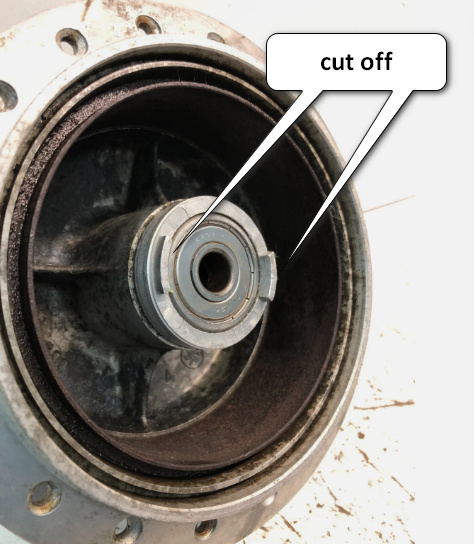
Late 60's Yamaha LS2 100 REAR RIMS, also found on AT1, CT1, HT1, and CT2 models. Common sizes were 18 x 1.40 and 18 x 1.60 N/A N/A 1" Mark Parnell makes an adapter that works for it. Widening of the original holes in the hub aren't even needed. It bolts right on. You will have to slice off the outer and inner bearing areas for this one to work. Also, not all do work. Those hubs with OVAL holes won't work. Look closely, find the ones with 4 HOLES like the Honda Trail 90 Hubs.


The Franken-Wheels
A fun list with details of awesome pairings of special hubs with known 17" and 18" rims. Coming soon... 5:26 PM 2/23/2023

The Thorpe Edition
A 17" Tusk Off Road Aluminum, 32 Spoke rim mated to an 18" rim achieving a proper look.


The XL Cyclekart Wheel
A Mid 1970's Honda XL350 Hub's laced to 17" rims.


The XT Pro Cyclekart Wheel Early 80's Yamaha XT125 Hubs laced to 17" Aluminum D.I.D. Yamaha YZ80 or Kawasaki KX80 Rims.